
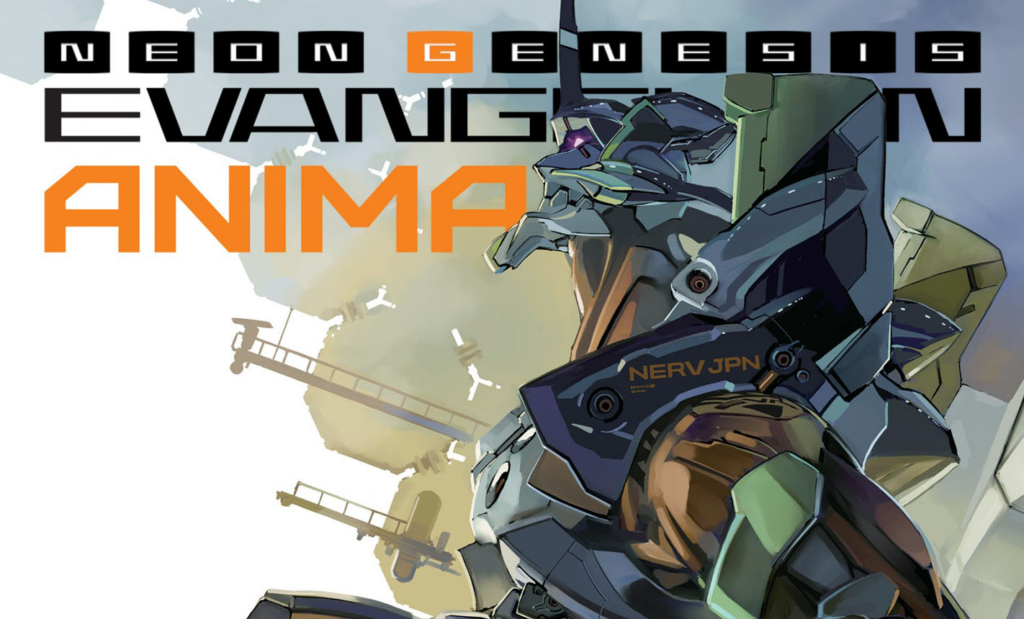
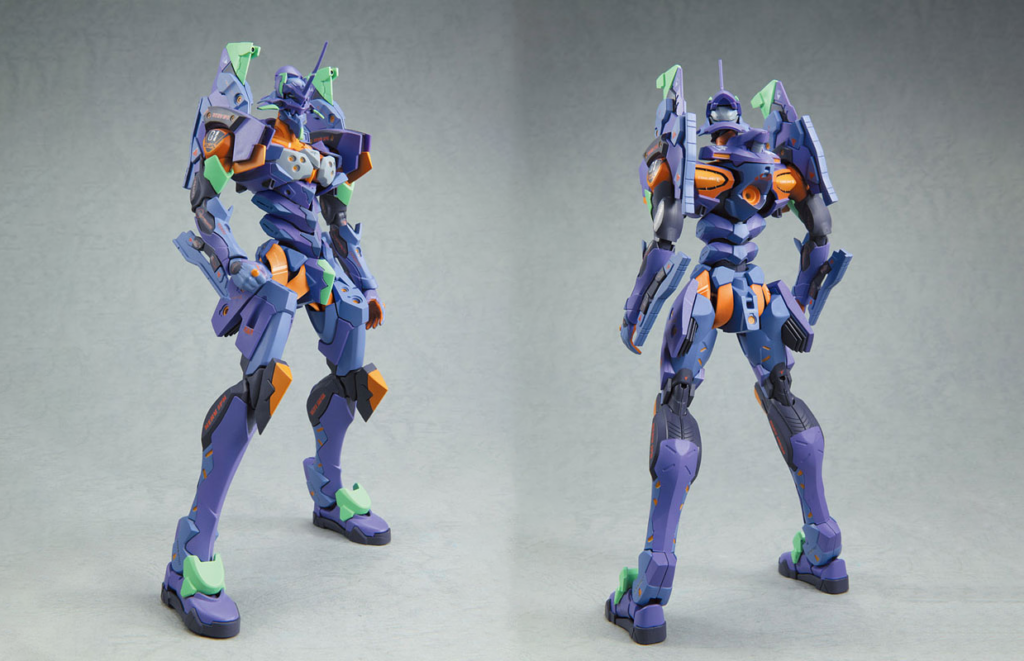
Many creatives helped shape Neon Genesis Evangelion into the classic that it became. Eva-01 by itself is one of the most recognizable icons in anime. A design that has more than stood the test of time. Its distinctive color scheme alone instantly brings it to mind. If given the chance, how would the artist who designed that giant imagine his own “Evangelion”?
Neon Genesis Evangelion: Anima is a novel series written and illustrated by Ikuto Yamashita, the original mecha designer for Neon Genesis Evangelion. It’s complete in five volumes and unlike any other Evangelion story. Here’s what I thought about it.
This post contains spoilers for the whole Evangelion franchise.
For a long time, Hideaki Anno has wanted Evangelion to become a Gundam-like franchise full of alternative spin-offs by different creators. The upcoming animated series by Yoko Taro is the biggest stride in that effort yet, but there have already been several smaller steps towards it. One of those steps was a project that Anno personally requested from Yamashita around 2004.
What Ikuto Yamashita came up with was Evangelion Anima. A sequel to an alternate version of the events of End of Evangelion, where Shinji has brought the Human Instrumentality Project to an early halt. After three years of peace, he is now 17 years old, and humanity starts facing new threats.
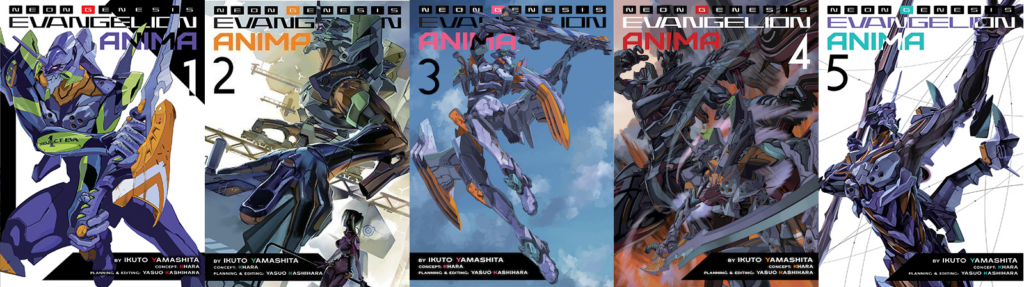
The novel was serialized in the Dengeki Hobby Magazine from 2008 to 2013, and later compiled into five books released from 2017 to 2019. When it started serialization, Yamashita was originally just coming up with a rough outline while others wrote and illustrated it. After a year, however, he took over both their duties. He even rewrote the early parts he hadn’t written himself for the book releases, which also only contain his own artworks, with some very occasional guest pieces.
Though the book remains a collaborative effort with his editor, I’m glad he rose to the challenge of taking up all those roles himself. Every aspect of the books end up highly idiosyncratic and we get to really see what “Ikuto Yamashita’s Evangelion” is like. As was the case with the Evangelion manga written and drawn by character designer Yoshiyuki Sadamoto, I’m fascinated by what creators so closely involved with the franchise from the very beginning will do with it when given full control.
Anima was written while trying to avoid story overlap with the Rebuild movies, which hadn’t been fully written at the time. While conceptualizing it, Yamashita had to ask himself “what wouldn’t Anno do?”. Along with the choice of a novel as the medium, which brings advantages and constraints totally different to anime and manga, this resulted in a very unique iteration of Evangelion.
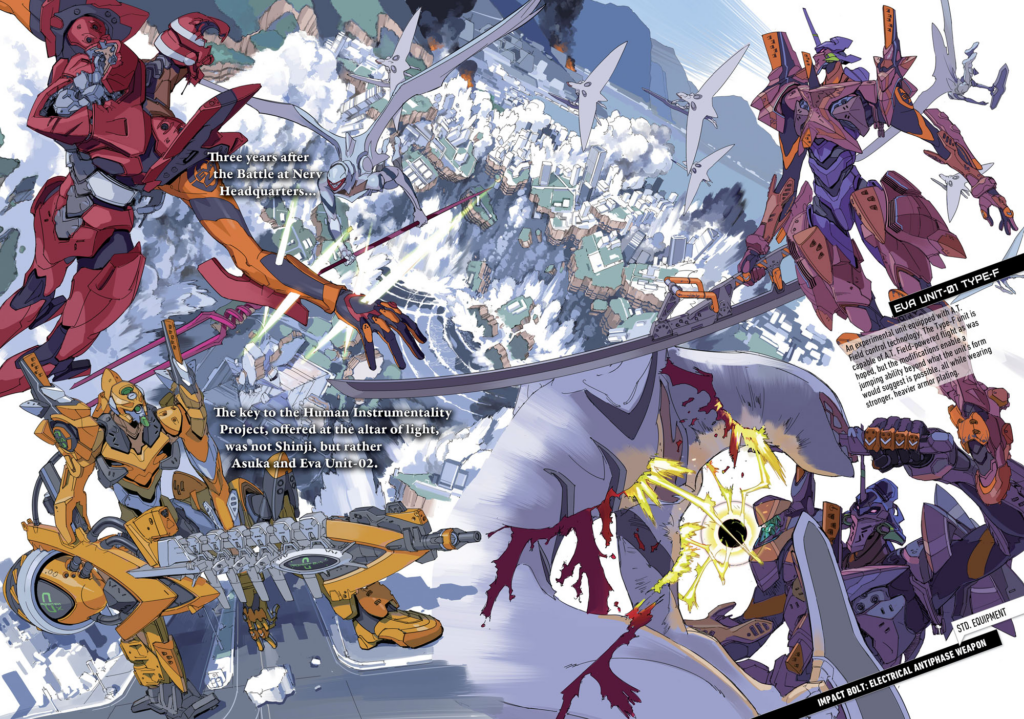
The most fun thing about Anima is how absolutely bonkers the story and lore is. It’s the kind of thing that makes you just want to sit someone down and explain to them what happens in those books for hours because you know they aren’t gonna read and you need them to know. It triples down on the biblical references of the original, it’s maybe somehow even more freudian, characters undergo unbelievable transformations, and insane things happen on a cosmic scale.
I’m not gonna summarize the books in this post, but I’m gonna touch on spoilers while I give my thoughts. If you’re already convinced you want to read it yourself unspoiled, you can bookmark this page now and come back later to tell me your thoughts in the comments. The book has been published officially in English by Seven Seas and is available in paperback, digital and audiobook formats.
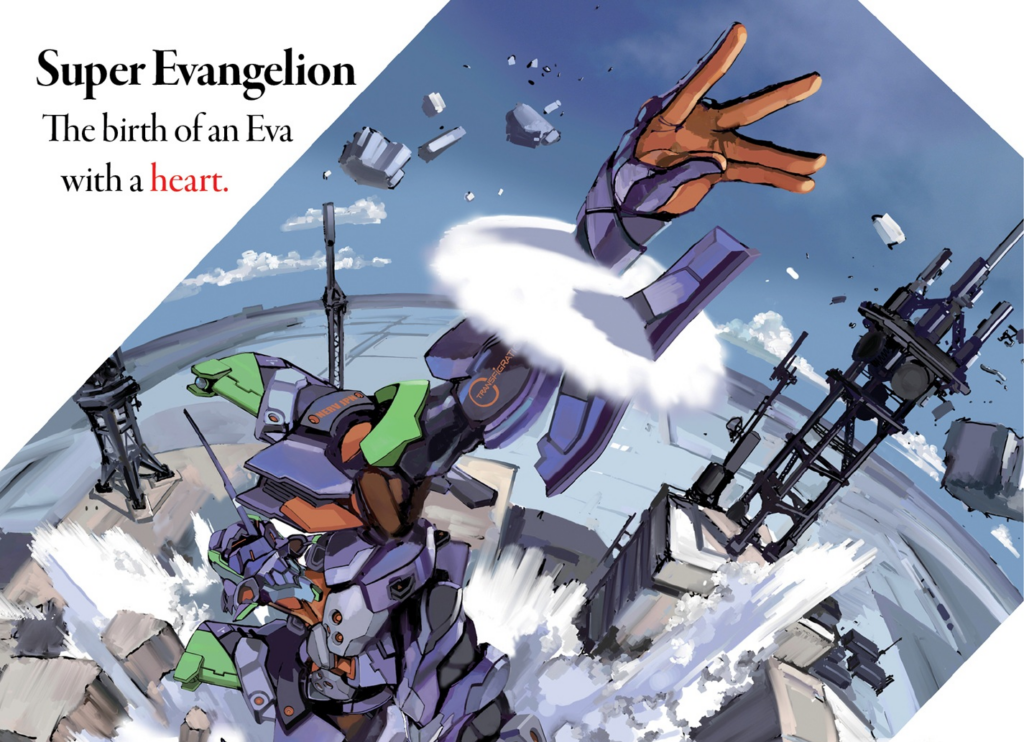
The central motif of Evangelion Anima comes from the transformation of Eva-01 into “Super Eva”, the Evangelion with a heart. The book explores what a heartbeat means: for the Eva, who draws immense power from it; for Shinji, whose body now lacks one; and for all living beings. Humanity viscerally recognizes Super Evangelion’s heartbeat as a beacon of hope, while the antagonists feel threatened yet attracted by it. The loud thumping sound prompts characters to reflect on the meaning of their own pulsing heart.
Deep in her chest, she could hear her own heart beating—THUMP, THUMP—announcing its presence like a lighthouse in the night. I’m here. I’m here.
For the first time, she thought of her heartbeat as more than a mere mechanism for circulating blood. A heartbeat was a primal and basic rhythm sent to the self and to the outside.
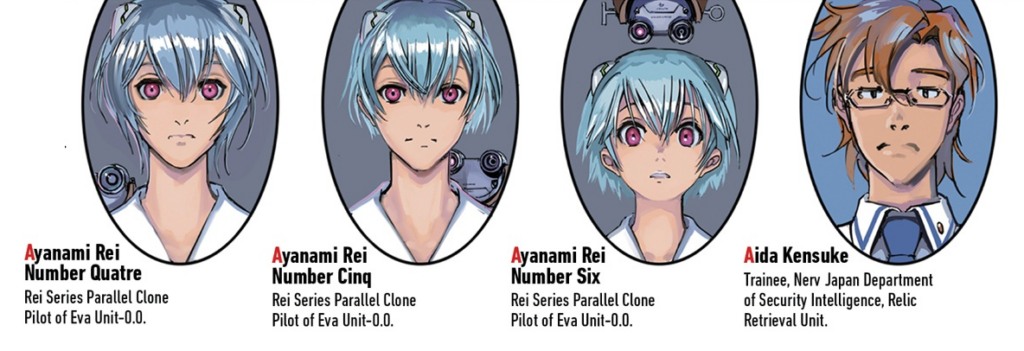
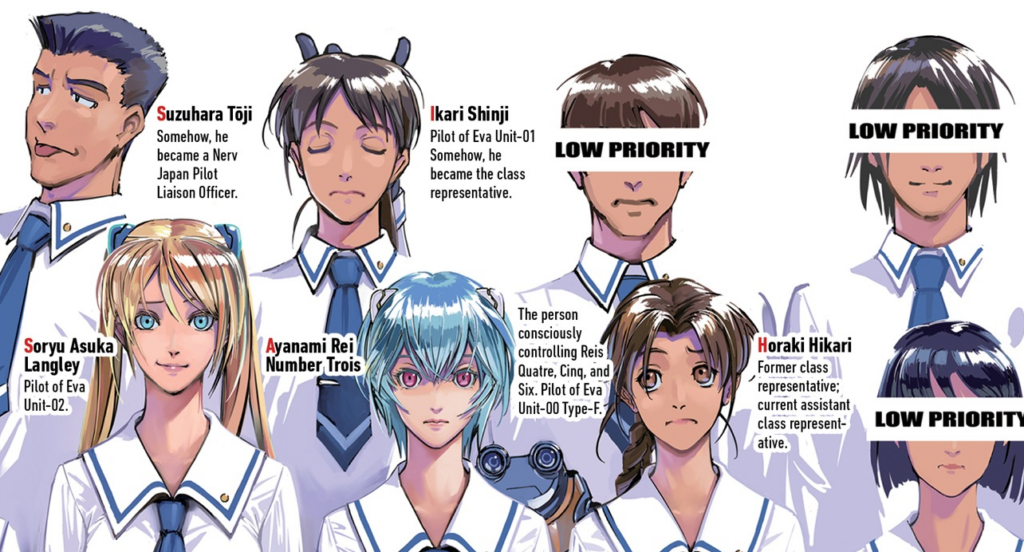
I like how Anima takes the introspection of Evangelion and materializes it in new ways. Rei’s soul is split into four bodies: Rei Trois, Rei Quatre, Rei Cinq, and Rei Six. As part of the inciting incident, they gain their own consciousness, each representing different aspects of her emotions This allows her to face herself (herselves) in a literal sense.
Shinji’s soul becomes simultaneously linked to his human body and the Super Eva. The latter then becomes a less filtered representation of his feelings. Later on, even his “heart” and his bodies become separate and must face each other to reunite.
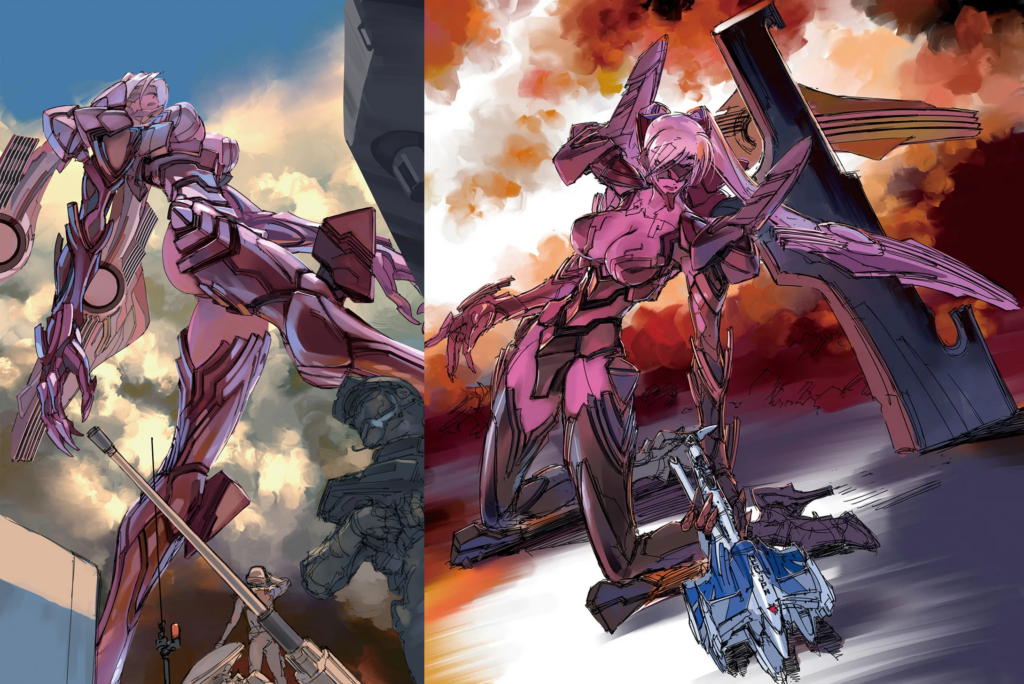
Asuka fuses with Eva-02 and becomes a red giant herself, codenamed Crimson A1. In this state, she’s serene, unburdened by pride and acting freely on all her impulses. While fused with her Eva, she’s able to act sincere and straightforward, without a shred of tsun.
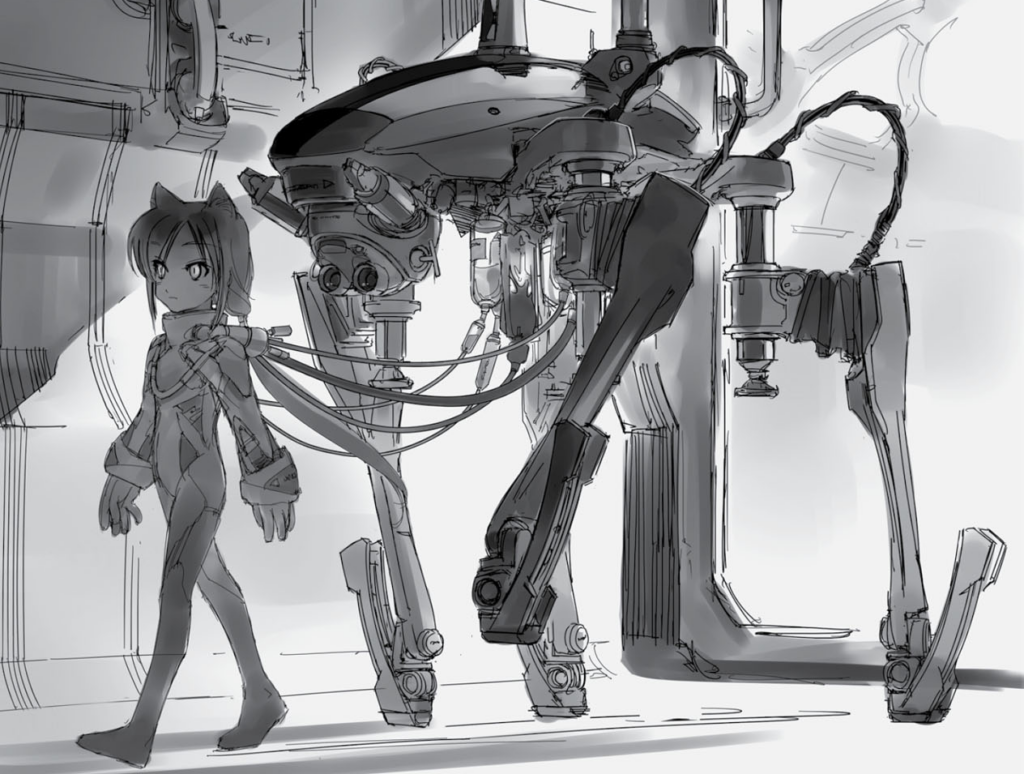
Mari, a young child in this installment, has had her DNA spliced with that of many animals. She considers those animals part of her pack and they actually manifest individually as part of her AT Field in battle. When something happens that separates her from them, she feels scared and isolated.
A few days later, humanity would realize that every bird had disappeared from the face of the Earth.
One thing that’s really neat about these books is that they take place during the biblical apocalypse. Unlike other entries that show apocalyptic events such as the Third Impact as happening very fast, Anima depicts a very slow and procedural end of the world. New calamities are staggered across days. Millions of people die but humanity tries to carry on with their lives the best they can while trying to put a stop to it.
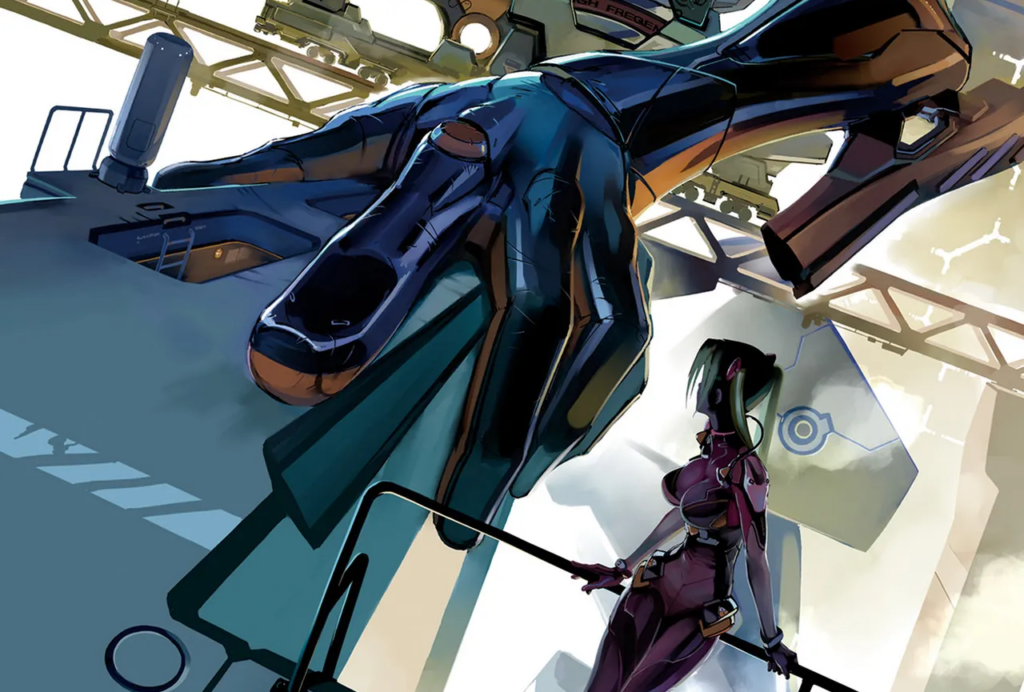
This spin-off being written by the series’ mecha designer means Anima can introduce new Eva models and loadouts at a rapid pace. The book is filled with cool designs that would’ve been tricky to animate. My personal favorite might be the Evangelion Unit-02 Type II Allegorica, a centaur-like, winged upgrade to Unit-02 with a “Fly Me to the Moon” decal that Asuka literally flies to the moon with.
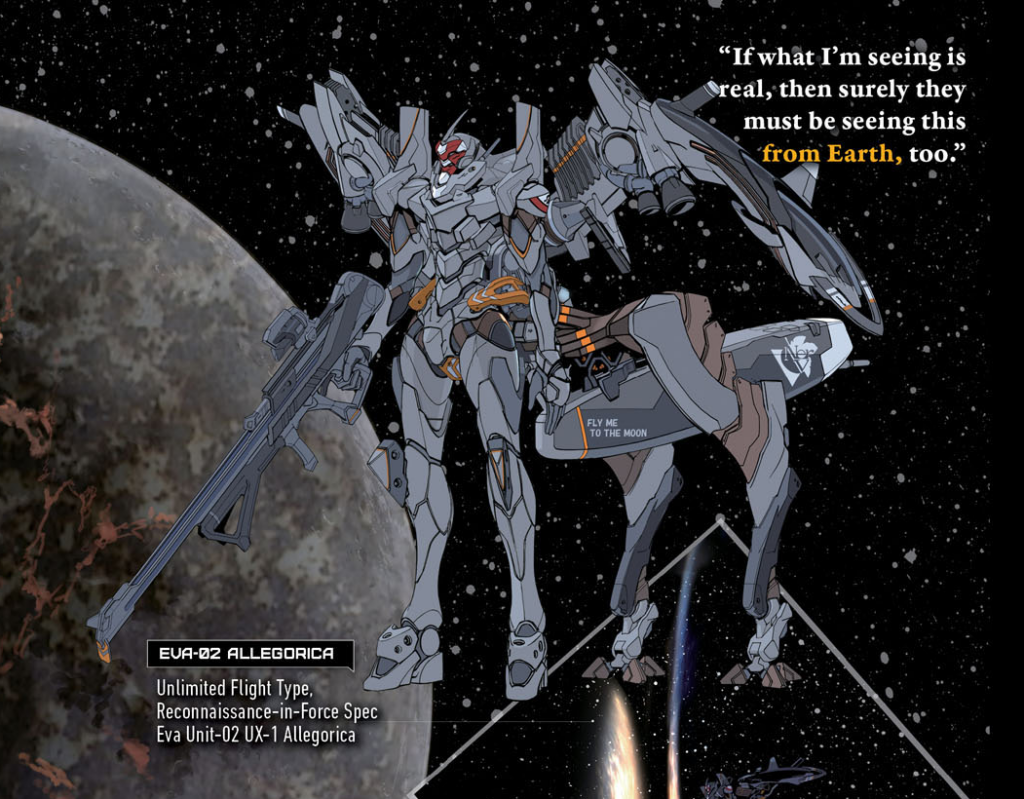
But it was this kind of levity that Asuka was flying to the moon to protect.
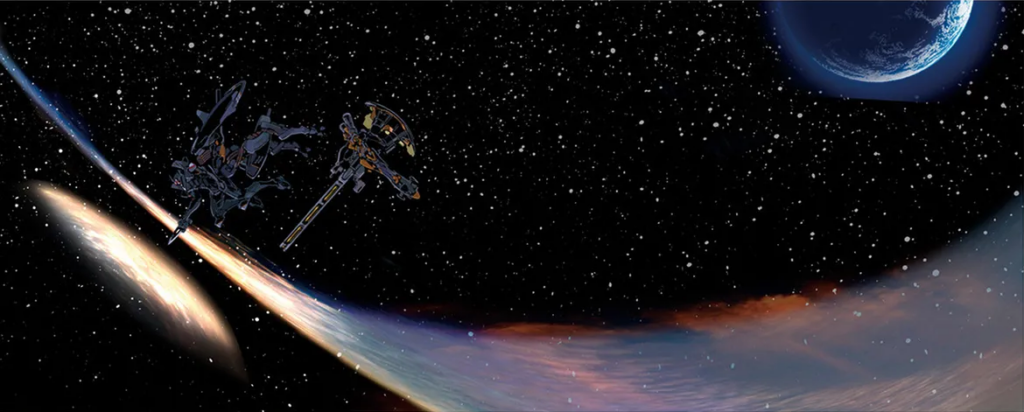
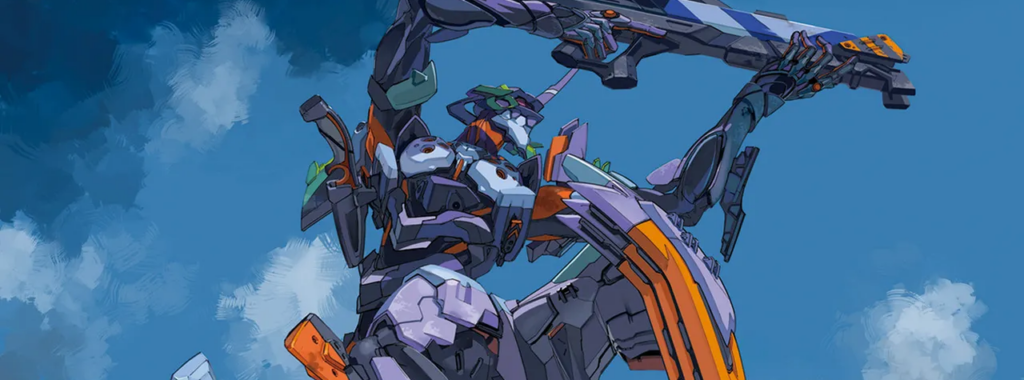
Most of the volumes open with beautiful color illustrations of the most climatic scenes in the book, along with design sheets. There’s also nice B&W illustrations sprinkled throughout. At the end of the volumes, you typically get concept art with the author’s commentary. In volume 4, one particular climax turns the book into a stylish manga instead, which was very neat, though not particularly easy to follow.
For me, the book was a bit too focused on describing the nonstop battles and its technological minutiae. It makes sense there was a focus on these things, having been published in a hobby magazine made for selling model kits, and being written by a mechanical designer. Still, it could get somewhat tiresome, and I felt the lack of slice of life scenes that other iterations of Evangelion had.
Another negative quirk that might have sprouted from its origin as a serialized novel is the constant reiteration of very recent events. I was probably helped by them between reading sessions one time or another but, overall, it got a bit annoying. The books probably could’ve been decently shorter and with a better flow if these “recaps” had been trimmed out of the volume releases.
The battles themselves also become repetitive. While on the NERV side there was a rich variety of Evangelions and weapons, which sometimes do fight each other, the same can’t be said for the enemy’s side. The Angel Carriers were interesting when they were introduced as a way to bring back the Angels’ abilities from the show, but got boring when ones carrying the cocoon of the same Angels started to appear again and again with similar tricks.
Nonetheless, Anima still manages to have impactful character moments in between all the fighting. In the first book, Rei Six gains a sense of self for the first time while she’s thrust into battle and is completely distraught. The way Toji congratulates her, likening the day to her new birthday, and how Six reacts to it is quite touching.
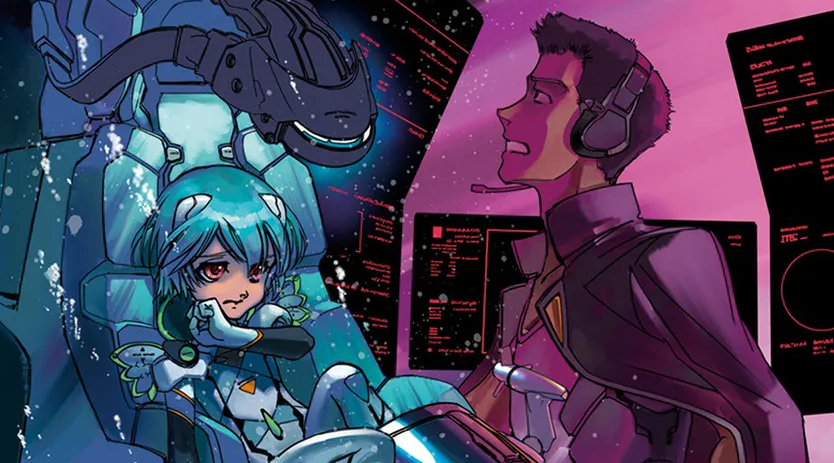
It’s cool how much focus Toji and Hikari get in Anima, as they’re usually just side characters. Toji as deputy commander of NERV Japan, Hikari as the Eva pilot for NERV Germany. Their relationship is often at the center of the story, too. I also liked the looming threat of Toji’s Bardiel infection, which felt reminiscent of Asuka’s in Rebuild but done differently.
One of the most beautiful moments for me was the conclusion of the plotline where Shinji promises to find Rei Trois’ own personal color. Without even meaning to, he finds it in the borderline of Earth and space, a shade of blue that represented not only the changes she went through while fighting with him inside his Eva, but also her link with the other Ayanami clones.

While Yamashita’s writing skills lean heavily towards descriptive technobabble and combat play-by-pays, there’s times in the novel where he pens a particularly poetic sentence and it hits hard. When Earth’s gravity started weakening, causing many incidents, he concluded: “As a consequence, despite whatever urgency they felt in their hearts, humans were now forced to slow down.”
The book is very blatant early on about how the Neon Genesis Evangelion world is a constant cycle of failed Human Instrumentality Projects and how the characters in Anima are caught up in one attempt that’s about to be forcibly reset. Before Thrice Upon a Time outright confirmed it, fans treated the universe loop in Rebuild as just a popular theory. It’s funny how this spin-off series, dubiously ‘canon’ as it may be, was sitting around untranslated with that plot point long before then.
There’s a lot of inspiration drawn from episode 20 of the original TV show, appropriately titled “Shape of Heart, Shape of Human”. In Anima, Shinji dies and is reborn in a similar fashion to the events of that episode about four or five times. It’s a bit much but it’s always done in a different way each time and fits the themes of the book. In the series’ final chapter, deliberately titled “Shape of Shinji”, the way he’s reborn for the last time is particularly outrageous and it’s a bizarre, incredible way to bring the story to a close.
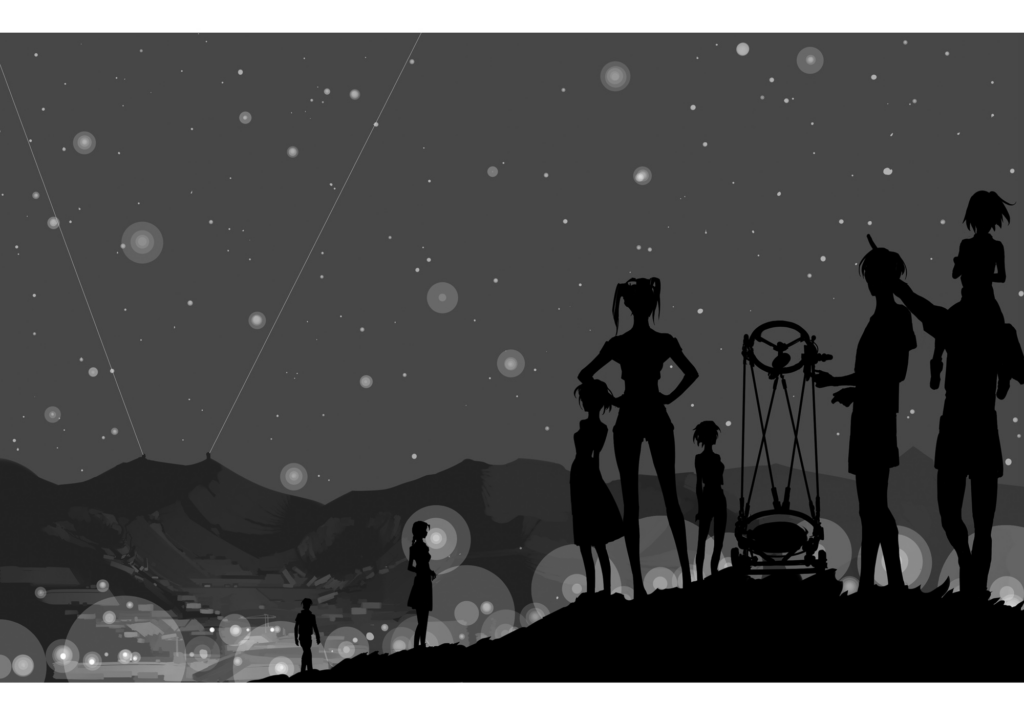
The ending is abrupt in a way that should feel typical of Evangelion but unfortunately doesn’t quite. What happens is a well-deserved conclusion for the characters of Anima that feels uniquely fitting to this iteration. Yet, there is a weak feeling to the ending. Instead of presenting a strong last scene in the final page, it basically just pitches what the sequel would be. The last drawings in the omake gallery thankfully do a slightly better job of closing the book, but I thought Yamashita could’ve pulled off something better in writing.
After writing Evangelion Anima, Yamashita went on to direct my absolute favorite of khara’s Japan Animator Expo shorts: Iconic Field. Reading Anima, it was interesting to notice some themes in common between the two works, namely the focus on the concept of the heart. If you’ve read Anima but not yet watched Iconic Field, I highly recommend it.
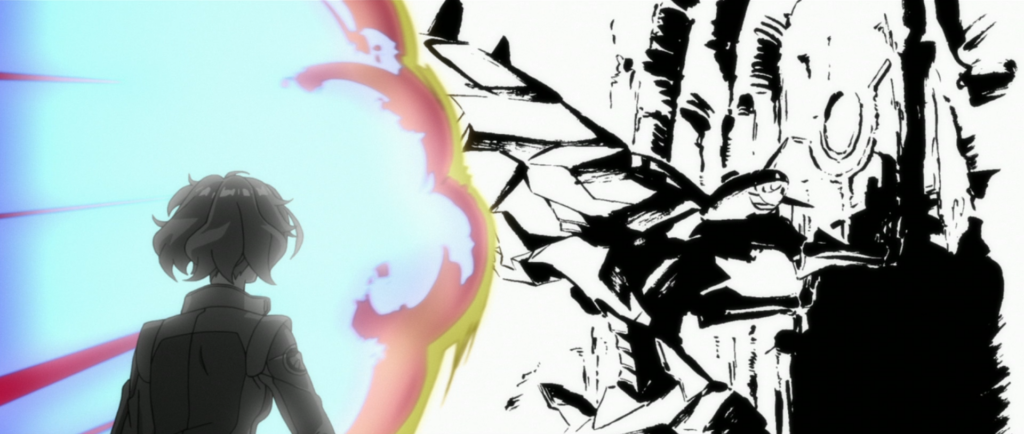
Ikuto Yamashita has continued to bless us with his mecha designs as recently as last year’s Mobile Suit Gundam GQuuuuuuX, but I hope to see him take the creative lead in more projects in the future. In particular, I’ve wanted to see Iconic Field expanded into a full movie or series for a long time now. Whether it’s that, an unlikely Anima anime, or something brand new, I’d be sure to enjoy it.
(Sources: Evangelion Anima Volumes 1-5, Evangelion ANIMA Ikuto Yamashita Art Book)
