
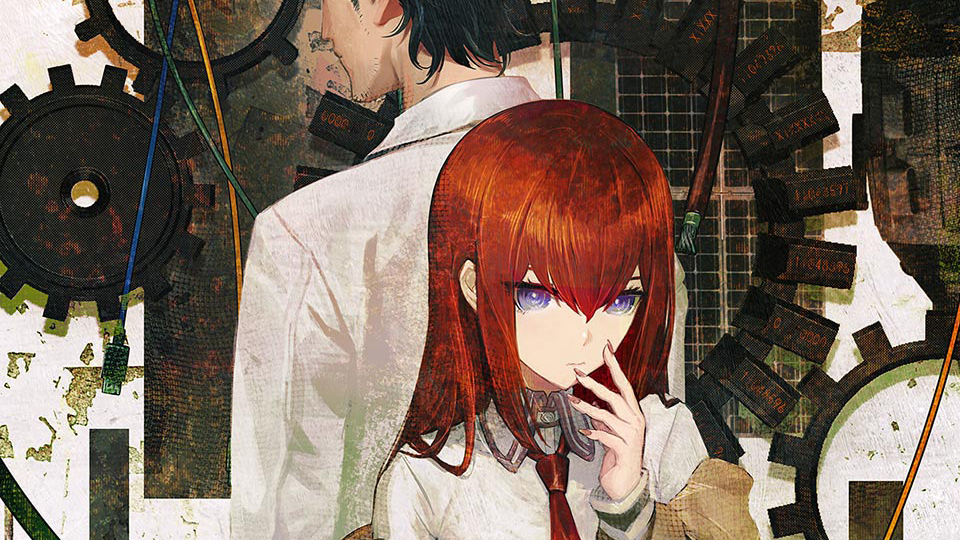
Steins;Gate RE:BOOT, the extravagant second remake of the second game in the Science Adventure series, came out this month. Does it live up to the original? What does it do that’s new? How did I feel about it? It’ll take quite a bit more than 36 bytes to tell you.
The choice of Steins Gate
No matter what, RE:BOOT is still Steins;Gate. One of my favorite stories ever made. This review is from the perspective of someone who has been a diehard fan for fifteen years. I’m going to be focusing on what’s different about this version and how I feel about it.
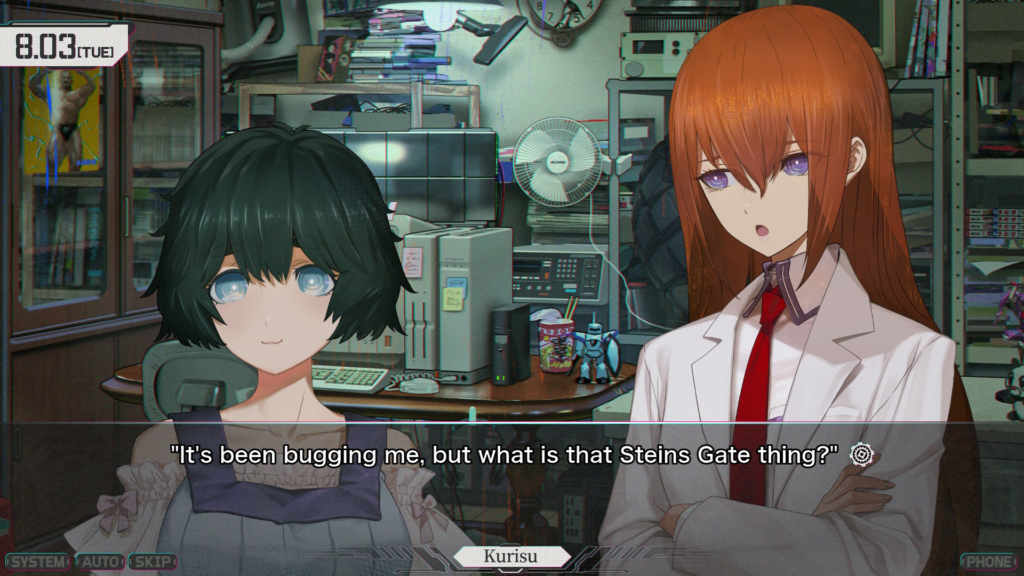
A synopsis, as a formality for newcomers: A self-proclaimed mad scientist and his friends tinkering with the invention of useless gadgets end up accidentally creating a time machine that can send messages to the past. Slowly, they find themselves knee-deep in conspiracy and have to deal with the consequences of their careless actions. This is a story about creating your own destiny.
I quite enjoyed playing RE:BOOT. Before we get to what I loved about it, though, we have to address…
The Elite in the Room
In 2018, MAGES. combined their masterpiece visual novel with its masterpiece anime adaptation to create something significantly worse than both of them: Steins;Gate Elite. This fully animated remake of the original visual novel replaced all artwork with clips from the show, but promised newly animated scenes for the character endings or iconic moments the anime didn’t cover.
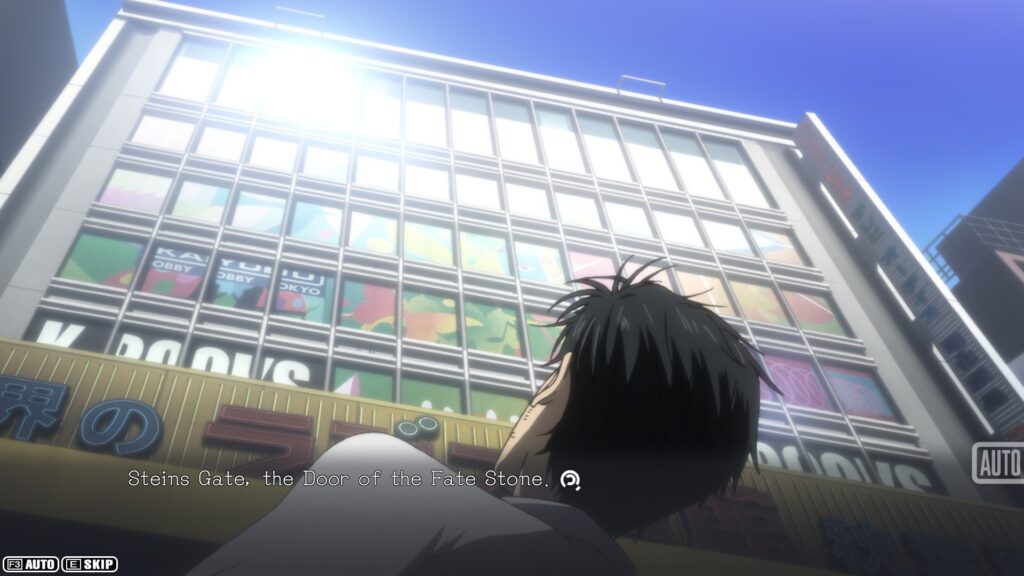
I’ve never played through all of Steins;Gate Elite. When I tried playing it, I couldn’t shake the feeling that I should either be replaying the original game or rewatching the anime rather than a poorly duct taped version of both. While I want to believe they intended to make something cool, the project reeks of cut corners. They didn’t re-record the voice acting, so the delivery of the lines, taken from the original VN, rarely matches the footage taken from the show. The repurposed footage also loses its original flow and context.
Steins;Gate Elite had a significantly truncated script compared to the original visual novel. Part of it was logical, as visible action descriptions were no longer required. A large amount, however, was simply due to there not being enough anime clips to use. If the anime had to abridge a scene, S;G Elite might simply remove lines to try and match it when possible. On top of that, they wanted Auto mode to feel close to the experience of watching an anime, so internal monologues were reduced so as not to linger on any given frame.
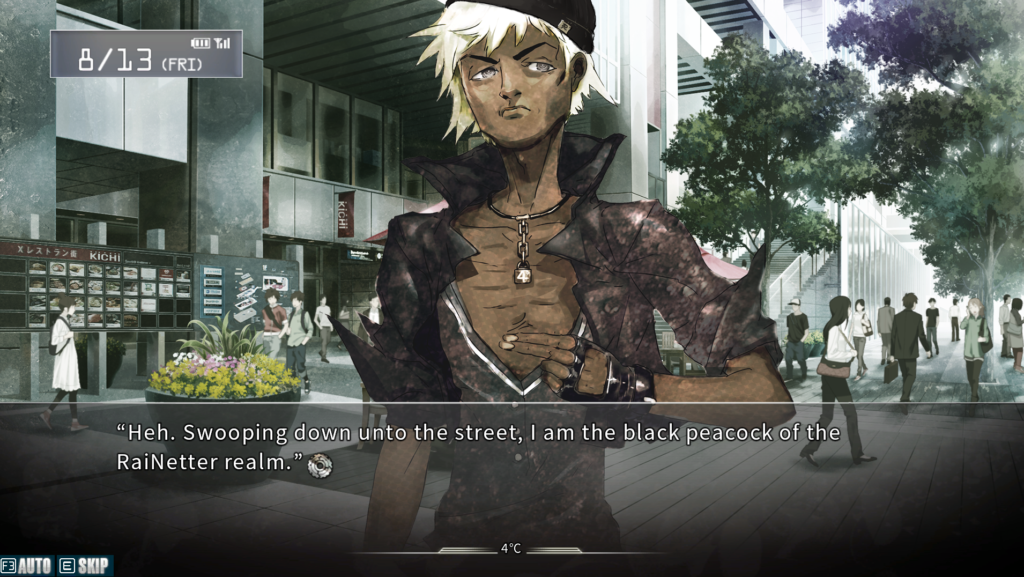
The biggest casualty of S;G Elite’s cuts was Chapter 7 (Made in Complex), where over half of the lines got deleted from the game. Since the anime understandably sped through this chapter in Episode 17, there wasn’t any existing footage to use for a lot of it, and the antagonist 4°C never got an adapted character design. Despite promising to animate material like this that the anime had to skip, S;G Elite instead completely nixed the corresponding scenes here. This leaves the newly animated Faris ending bereft of all build-up.
The one significant blemish in Steins;Gate RE:BOOT was the creative decision to use Steins;Gate Elite’s script as a base. It restores necessary descriptions, but several great monologues and exchanges are still missing. If you’ve ever read Steins;Gate before, you’re guaranteed to notice the absence of some memorable lines.
What’s particularly unforgivable is the use of S;G Elite’s version of Chapter 7. No matter what, the missing scenes should have been restored. The severely abridged Made in Complex dramatically reduces Faris’ presence in the game. It cheapens the build-up of trust between Faris and Okabe and doesn’t help endear the reader towards their relationship. Not to mention the loss of a fun antagonist in 4°C, who returns in several spin-offs.
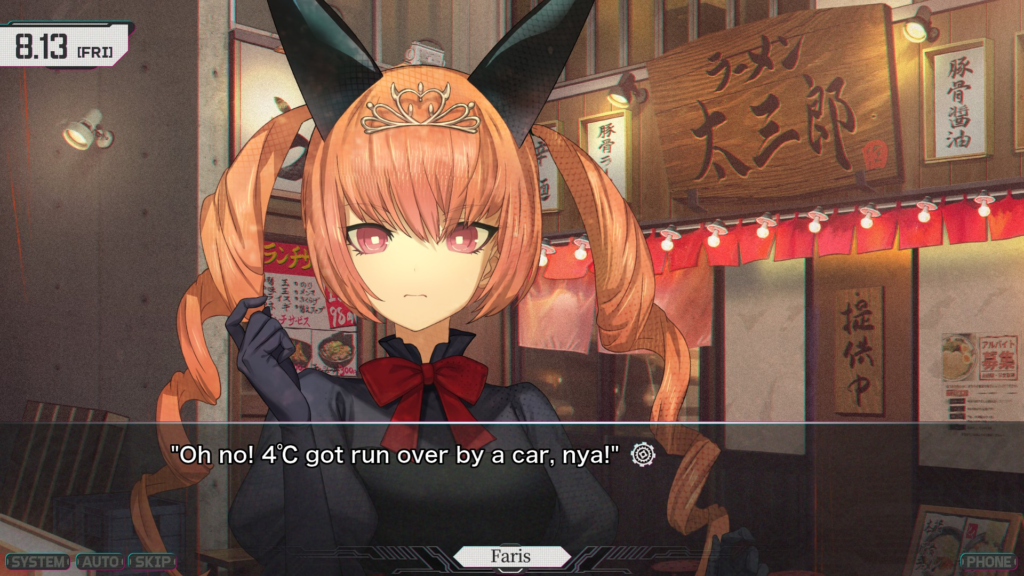
The anime originally did this because of its medium’s own limitations and priorities. S;G Elite was constrained by the existing footage and animation costs, disappointing as it was. RE:BOOT has no excuse. It’s constantly flaunting its high budget, including in this very chapter by designing a new outfit for Faris inspired by the anime. They could have totally produced whatever few assets it was missing for an unabridged Chapter 7, which is important to Steins;Gate as a visual novel with multiple heroines.
2nd EDITION ver. 2.31
For me, the number one selling point of RE:BOOT is the completely new voice acting.
In the original Steins;Gate visual novel, the voice actors were still growing accustomed to the characters and their performance sounds very different from how the characters ended up sounding in every subsequent project such as the anime and Steins;Gate 0.
Some of them are more evident than others. Tomokazu Seki, for example, played Daru with almost no nasal qualities to his voice originally. I love the experience of going back to the OG and hearing their early takes on the characters. Their performance was also already memorable from the start.
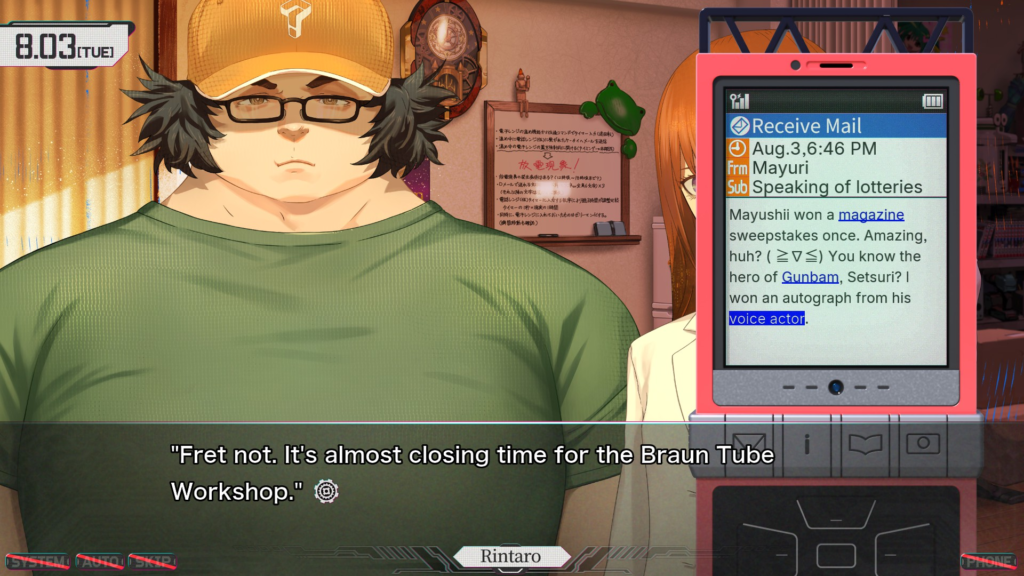
But… what if we could have the Steins;Gate visual novel entirely revoiced by its original cast now that they’ve completely settled into their characters after so many years of playing them? It’s a crazy dream scenario that I never ever thought I’d see come true. Yet it has.
It reminds me of live readings that voice actors usually do for events except instead of a handful of scenes or lines it’s the whole game. We get to hear a brand new take on the whole game!
Visual novels rarely don’t just reuse whatever voice lines they can. Revoicing a whole game is usually only done when recasting. Steins;Gate Elite basically needed to be revoiced for its concept to work, and they didn’t bother doing it for that.
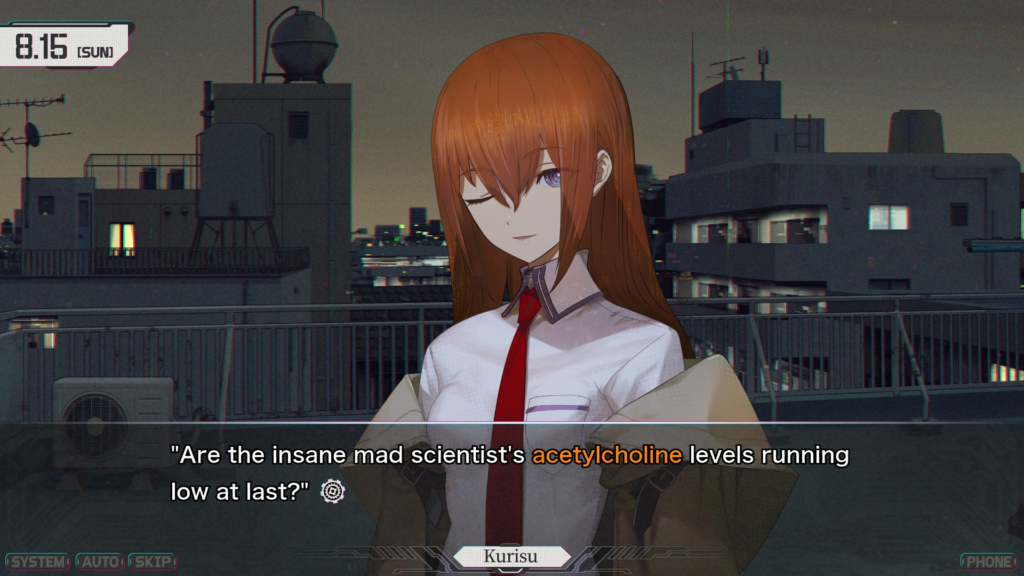
With 17 more years of acquired skills and a deep knowledge of both the characters and the story, the cast were able to give their all to this second attempt. In an interview with Famitsu, Asami Imai explained how when they first recorded for the game, she only had the scripts for Kurisu’s scenes and recorded lines by herself not knowing how the rest of the cast would do their parts. For RE:BOOT, she could perfectly envision the performance of her castmates while recording.
Mamoru Miyano had the most outstanding performance here. Hououin Kyouma’s chuunibyou is more haughty than ever and Okabe Rintaro’s suffering is even more heartbreaking. He’s completely perfected playing the character and brought it back to where it all started.
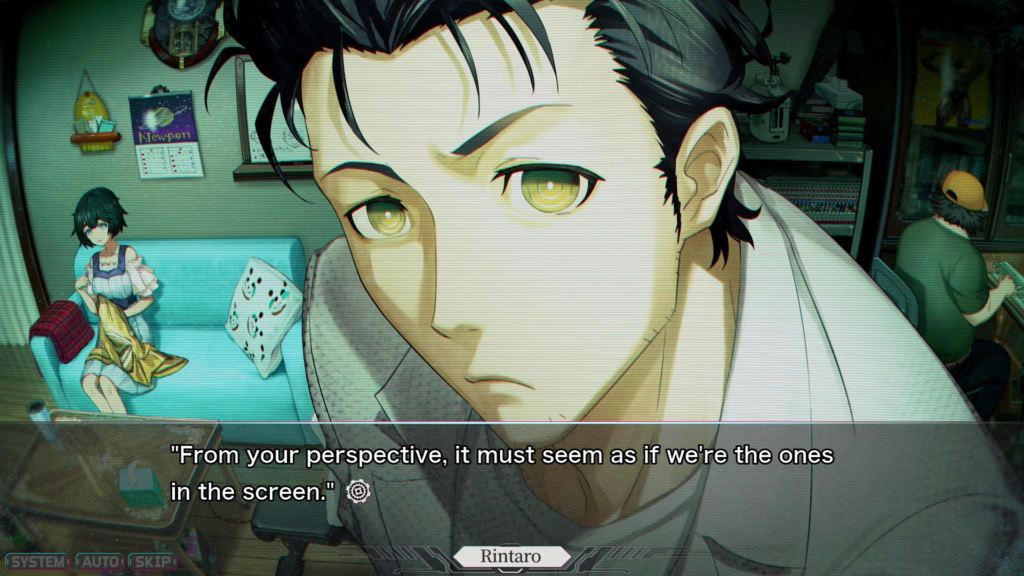
I’ll never dismiss the original recordings. There’s still some lines there that I’ll admit couldn’t be surpassed in RE:BOOT. But it’s simply too cool that we have two versions to listen to now and the whole cast did a phenomenal job.
As a side note, on the topic of voice acting: it’s a shame Spike Chunsoft has now missed two opportunities to dub Steins;Gate in English. Especially after the Anonymous;Code dub was well received.
That’s why we love them, that’s why we admire them
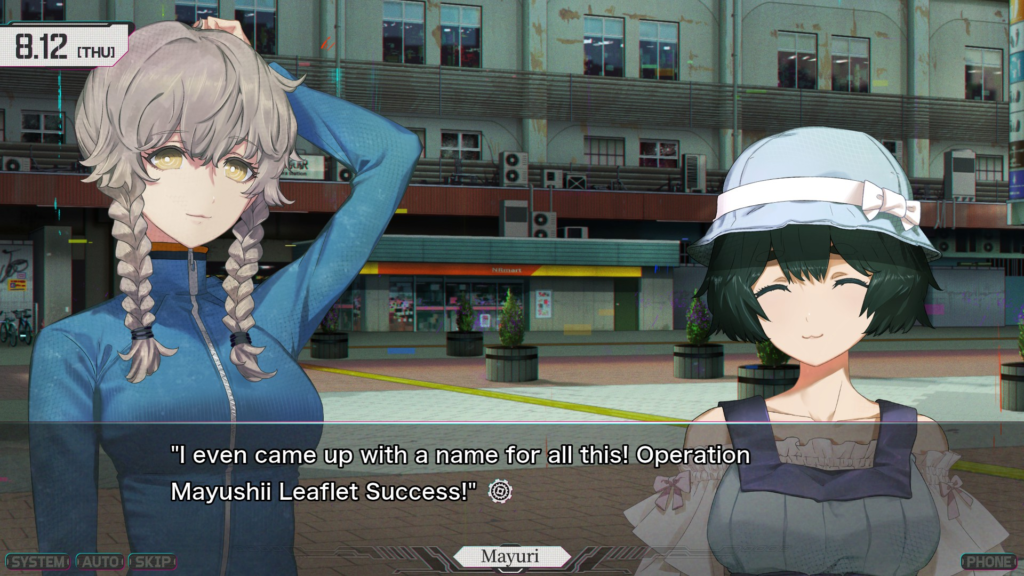
The updated designs by huke look beautiful. A lot of visual novel remakes, like MAGES.’ own YU-NO remake, hire new artists and drain all the soul of the original game. Here, you can feel huke’s own desire to update his old artwork. While the result looks decidedly different, as a fan of all eras of huke, it still looks stunning, and in my opinion, keeps the spirit of the original art.
The E-mote animations are a big step up from the ones in Anonymous;Code and for the most part look really good, lending again a new liveliness to the game you don’t get from still sprites. The most brilliant use of them is showing Moeka typing mails at absurd speeds. Since the Steins;Gate anime had its own distinct look, there’s a certain joy from seeing huke’s art being animated directly here, with his trademark overlaid patterns and all.
The new event CGs are absolutely crisp. While I loved the vibe of the old ones, the art team back then often struggled to consistently replicate huke’s designs and several of them looked off. RE:BOOT’s CGs on the other hand are consistently on-model and high quality. They aren’t all upgrades to the originals, some of which were too emblematic for any update to compete with, but in general they’re really great.
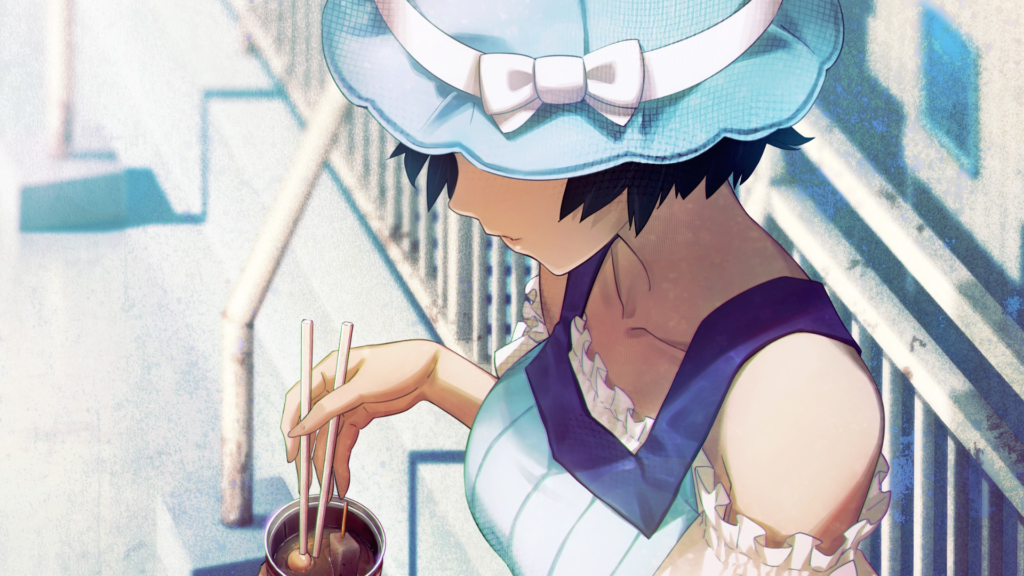
Veteran SciADV artist Matsuo Yukihiro helmed the production of the event CGs and as usual he did really well. Specific CGs have a lot more variations now. A lot of scenes that didn’t have any before now do and most moments are expertly chosen to bring more impact with the extra visualization. It doesn’t have to be a very highkey scene, sometimes a simple conversation can be given a brand new mood that the default sprites just wouldn’t give it.
There are a few scenes that no longer have event CGs when they used to. I do miss a couple of them but it generally feels like sensible relocation of resources.
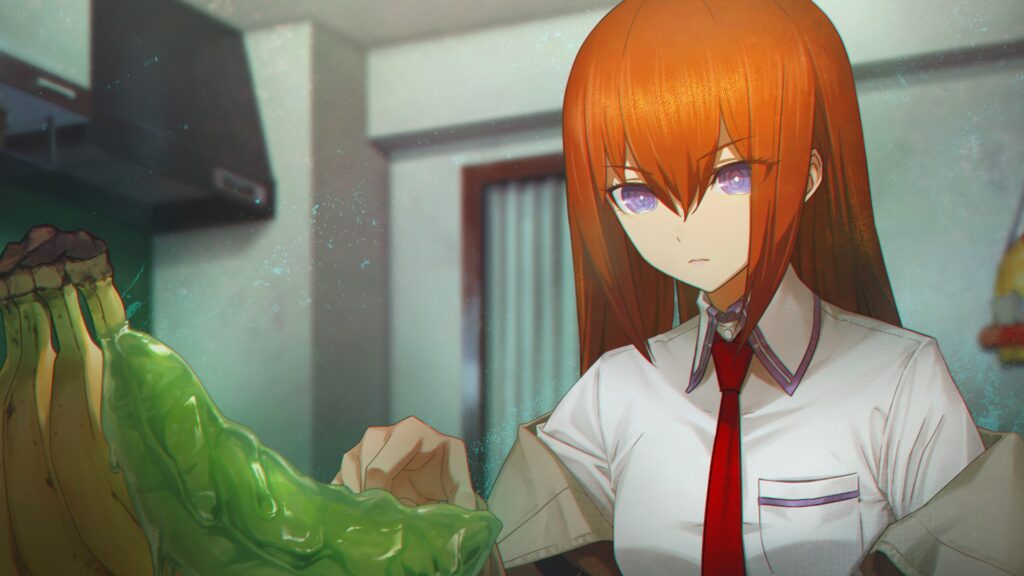
Several of the new CGs feature animated lip flaps and blinking as seen in Anonymous;Code now too, which is quite nice. A few of the new or updated CGs borrow their composition from the anime, which feels appropriate as some frames of the anime have become emblematic of Steins;Gate as well.
Some event CGs are so good they might as well have justified the whole game being made for me. In Chapter 4 I was impressed by how an updated CG upped the comedy of a scene so strongly as to create a perfect one-frame gag. At the end of the same chapter I was floored by how more touching a scene became with the addition of a new one.
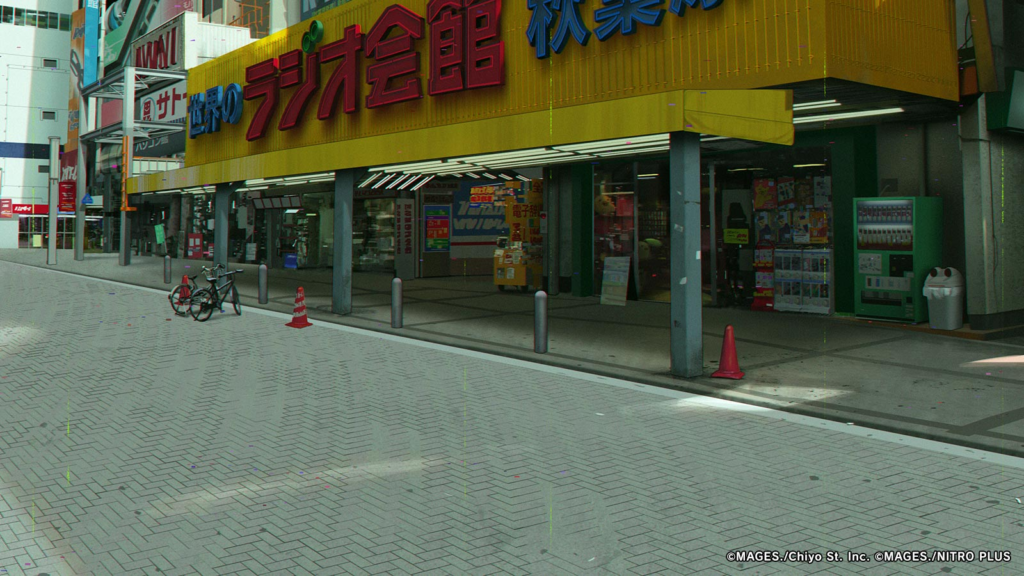
Akihabara, 2010 as a setting is very central to Steins;Gate, so the game backgrounds are really important. RE:BOOT’s team crafted extremely detailed sceneries faithfully recreating the locations in a period-accurate way. On top of that, RE:BOOT’s backgrounds have a unique style to them, seemingly established by contributing artist Tomono Rui, whose first drawing of Radi-Kan became the blueprint for the rest of the team. This style helps give RE:BOOT its own identity.
The backgrounds also feature a certain quirk as one of several nods to Anonymous;Code players, another of which is the game’s updated UI.
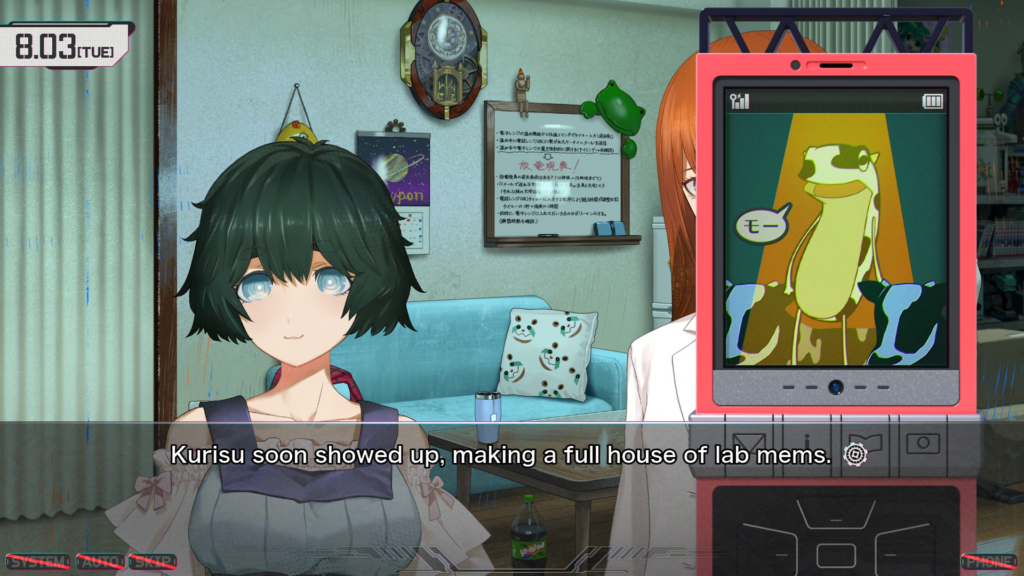
One bone I do have to pick with the new backgrounds is the scrubbing of all ChäoS;HEAd references from them. The lab no longer has a gero froggy, despite gero froggy references in the text staying intact and all gerofroggy phone wallpapers being remade, and the yuri couple wearing the Suimei uniform are no longer outside of Akihabara Station. A certain singer is also gone from the UPX screen.
A future that had yet to be written
Moeka being snubbed of a route has finally been rectified after all this time. The beloved Hyde of the Dark Dimension Gamma drama CD, the closest she had to a route, serves as the basis for her new ending. But it’s not a simple retread of old material, plenty of wrinkles and a different direction makes this a whole new story.
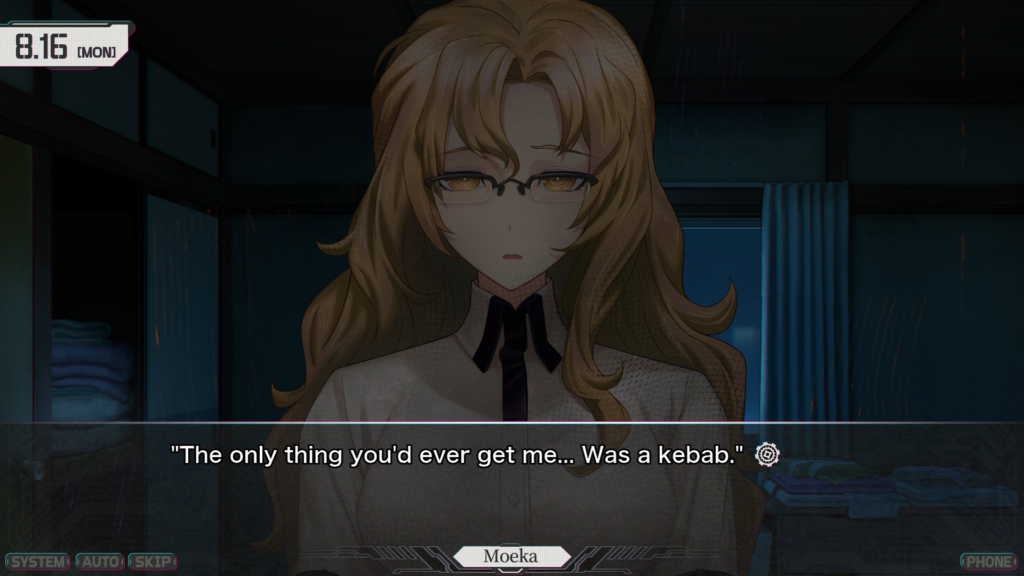
This route fits in seamlessly exactly where you’d expect as though it was always meant to be. Not only is it a satisfying addition as justice for Moeka, it also feels like a bit of justice for Drama CD γ, which has felt neglected for sixteen years compared to other early side material that got expanded and adapted in several ways.
Suzuha, Faris, and Luka’s endings also all get expanded with an extra scene. This did set up expectations for the Mayuri ending that were not met, as hers appears to be the same as it’s always been. Suzuha’s new scene is lovely and features a stunning new CG. Faris’ is really nice too and complements her route well, but doesn’t make up for the rest of her lost content.
Changes to Luka’s route attempt to patch over some of the egregious tone deafness of the original ending, which was the low point of the Steins;Gate visual novel. It’s a respectable attempt but it doesn’t fully fix it. My Darling’s Embrace and Linear Bounded Phenogram continue to serve as much better apologies to Luka for this route.
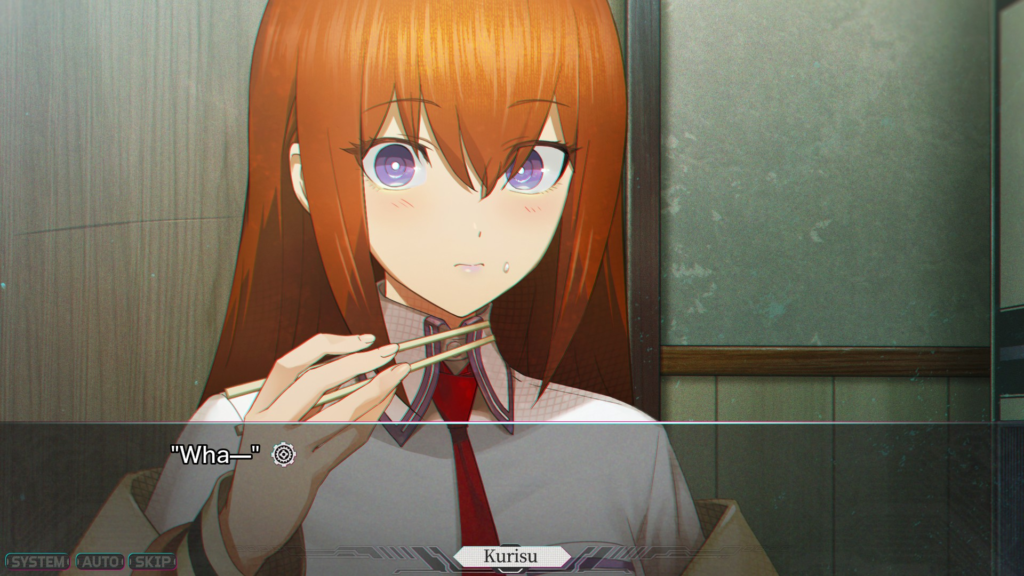
At a certain point in the game, there’s an entirely new scene that’s pure fanservice for old fans of the series. I cannot possibly describe just how giddy it made me. It’s exactly the level of fanservice that I felt some past entries were lacking, so I’m really glad they did it right. I really loved this addition more than anything else.
After completing the game, there’s a cryptic hidden teaser for the next game. This extra scene with surprising implications is completely aimed at Science Adventure series fans caught up with every title. I won’t go into details but it is wild.
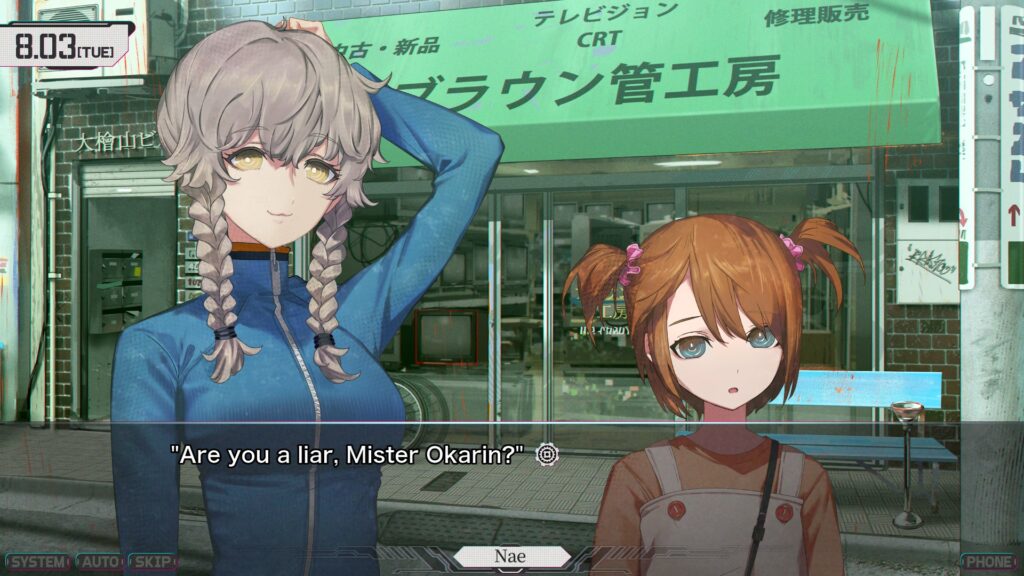
All this new story content is great but none of it is really voluminous enough to be the only reason you’re buying the game for. Buy it if you want to re-read Steins;Gate in a fresh way and consider these as bonuses.
“0” is the past, “1” is the future, “new themes” cannot be found
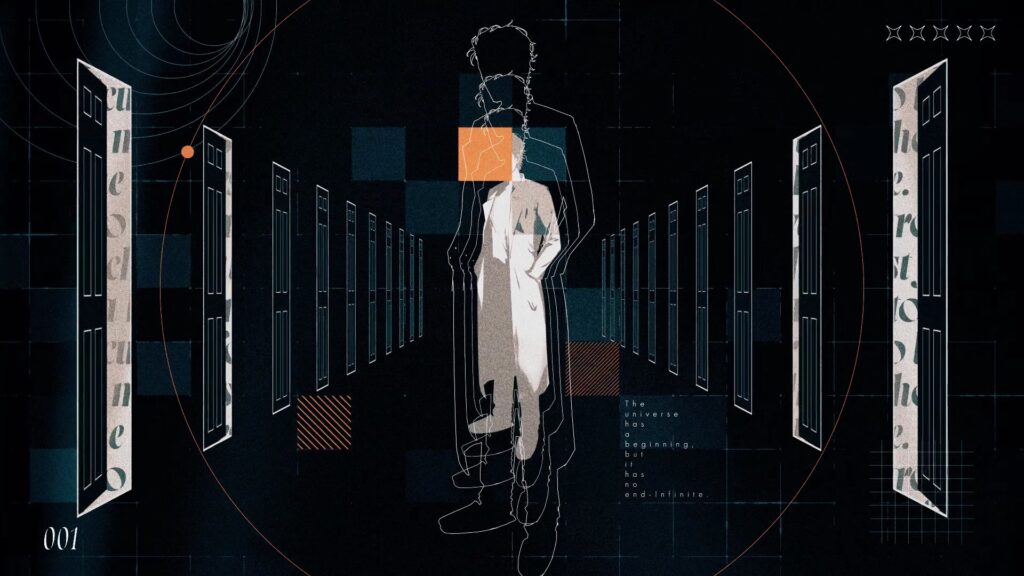
The lack of new songs is disappointing but with so much about the game renewed, old music helps anchor the game in nostalgia. At least the new videos that accompany the familiar opening and true ending themes are extremely good.
What’s more of a let down is there’s songs missing. Masquerade isn’t in the last scene of the Faris end, Technovision is gone, and all ringtones from ChäoS;HEAd are missing despite the mails that unlock them still being in the game.
Actually, insert songs are gone from the game entirely, which is pretty sad. If S;G Elite had something going for it, it was increasing the amount of inserts.
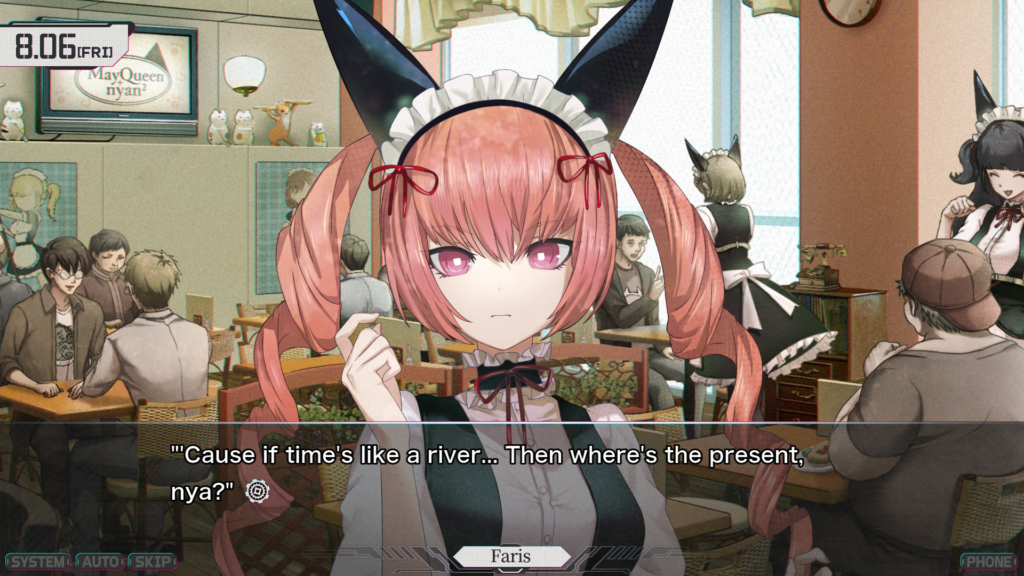
Takeshi Abo made new arrangements of his legendary original soundtrack just for RE:BOOT and it brings the perfect amount of novelty to the familiar background music.
One sound-related grievance I have is the grating echo effect they applied to all flashback dialogue. It should have been a much subtler reverb.
And you call yourself a super hacka?!
Unfortunately the game does have a couple bugs that bring the experience down. In an important scene halfway through the game, some dialogue that is only supposed to trigger if you’ve been collecting the True End flags plays out regardless, even though you have no context about it.
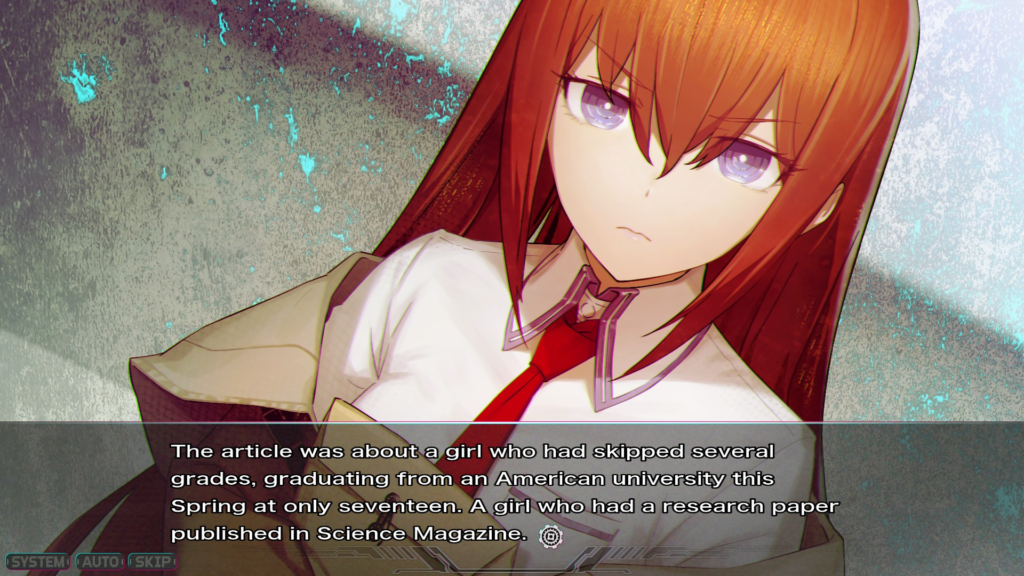
Whenever the text flows over three lines long, which is not very often, it gets vertically squished. I’d say it’s better than clipping but it still takes you out of the experience and I feel like a better solution had to exist.
A certain mail that’s supposed to stay updated to track the divergence number throughout the game is now static to when you receive it. It’s a bit hidden, maybe along the lines of a famous easter egg, so not many people might notice, but it does cause a bit of a plot hole. Every port of the original Steins;Gate made sure this worked even as the technical implementation of it changed, so it betrays a certain carelessness to this version.
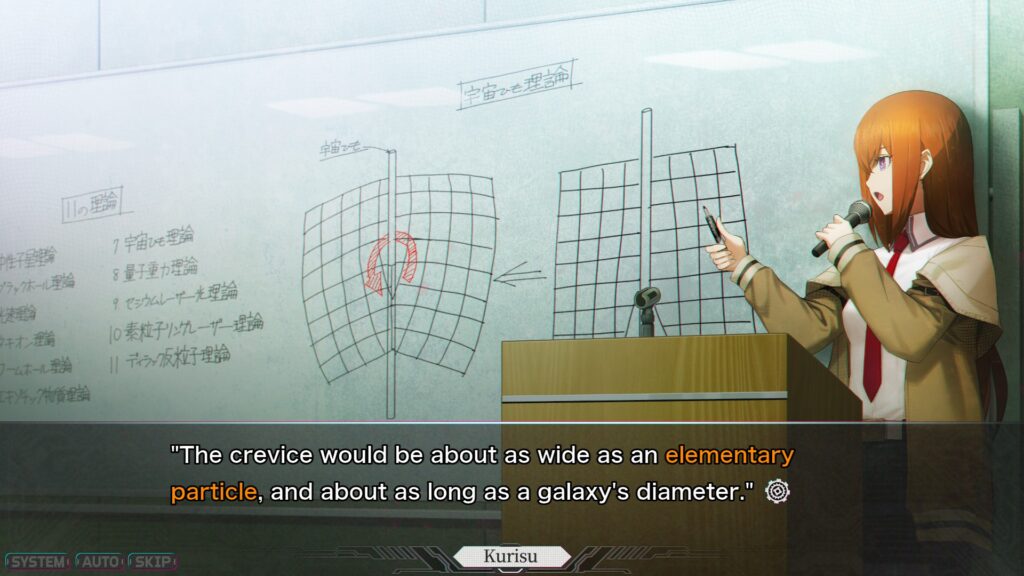
Most of the text inside images, such as Kurisu’s writing on white boards, isn’t translated in RE:BOOT even though it had been in previous versions. Generally these have information that is translated via text so it’s not a complete dealbreaker. It’s still a problem, as certain diagrams are meant to make you absorb explanations more easily and now they can’t be parsed outside of Japanese.
All of the above will eventually be fixed through the Committee of Zero fan patch on PC and modded consoles but they’re really things that MAGES. and Spike Chunsoft should address themselves. The misconfigured dialogue is especially egregious.
The new “Observer” feature showing a flowchart of every event is a very welcome addition to keep track of all alternate scenes you might have missed. I do wish its implementation were a little more robust. The ability to zoom in and out would’ve been welcome, as well as being able to jump to any scene in it. For its intended purpose though, it was helpful.
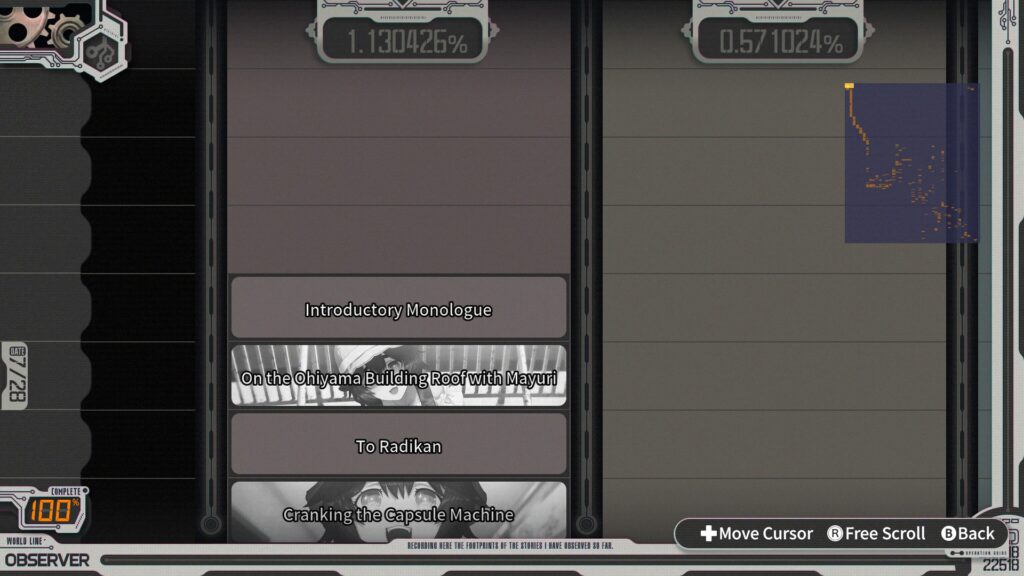
It does beg the question of why they didn’t implement a mail tracker like My Darling’s Embrace and Linear Bounded Phenogram had to help you read every single possible response. As someone who shamefully never bothered getting every alternate mail in those games, though, I guess it doesn’t exactly matter too much to me.
After getting your first ending in the original Steins;Gate, you used to unlock a phone indicator that would show up in your textbox whenever using your phone could influence the story. The indicator is gone, but skip mode will still pause in those situations, so combined with the Observer mode, there isn’t lost functionality. It does mean the game’s systems might feel even more obtuse than usual without a guide, though.
Later ports of Steins;Gate also added the ability to preview mail responses before sending them, allowing you to back out and choose a different one. RE:BOOT reverts to the original, more frustrating system where pressing a keyword locks you into whatever response it’s tied to.
Thankfully, aside from the unedited images, the localization is excellent. The original game’s translators have returned to touch up their work from a decade ago and translate the new text and they did a great job.
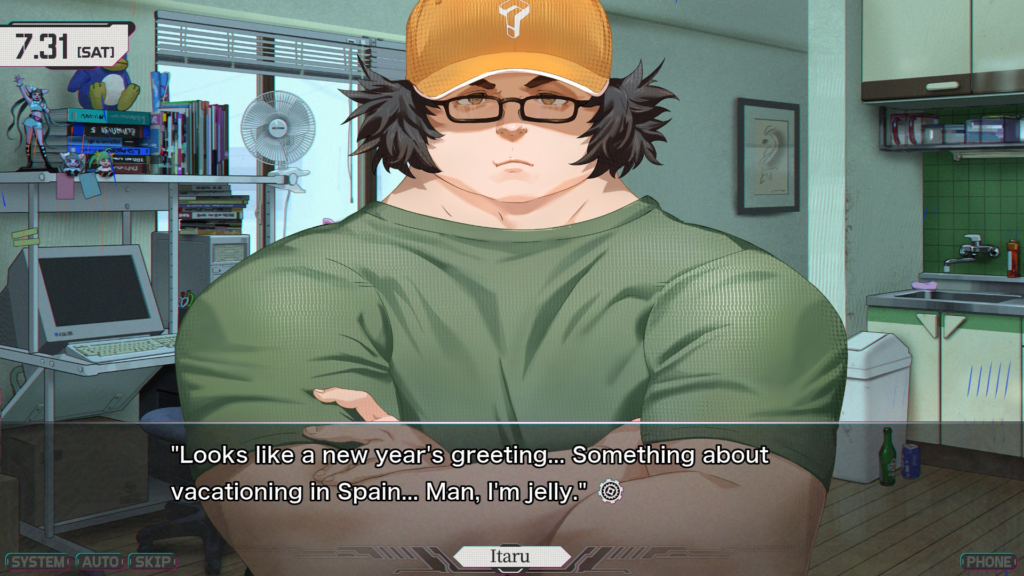
El Psy Kongroo
Before I played it, I thought I would need Steins;Gate RE:BOOT to justify its existence through some mindblowing new story material that could only work within the framework of a remake. It seemed like such an unnecessary project given how strongly the original Steins;Gate has stood the test of time. All this budget would surely be better spent on developing new games?
After playing it, I feel like it managed to prove its worth despite being a standard remake. If MAGES. wants to use modern technology and all their years of built-up experience and know-how to remake their most successful title while going all-out, I think that’s fair. Hopefully this game’s sales help fund the development of the next Science Adventure game.
It’s unfortunate that a few blunders make it hard for me to recommend RE:BOOT as your first experience with Steins;Gate. For your first foray into the visual novel, try going with the original. If you’re stuck on a platform like the Switch where your only options are Steins;Gate Elite and RE:BOOT, though, definitely choose RE:BOOT.
If you were thinking of replaying Steins;Gate, this is the perfect choice. It’s especially great to revisit it through RE:BOOT after having played Anonymous;Code and all other Science Adventure titles. There’s a lot, both new and old, to appreciate if you do.
