
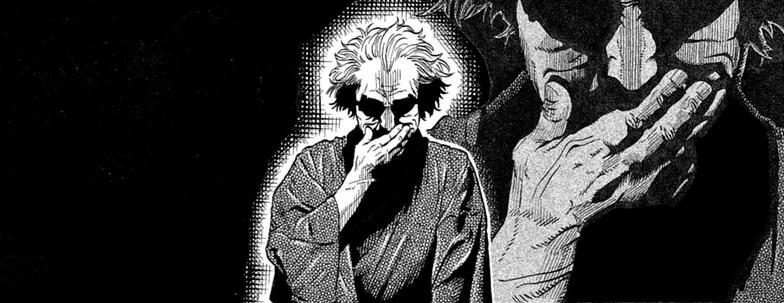
Every Sunday, I sit down to read the new chapters from Weekly Shonen Jump. Two weeks ago, when I read the new Akane-banashi, I couldn’t move to the next series right away. I had to just reflect on that experience for while. Even now I’m still thinking about it.
This post contains spoilers for the Akane-banashi manga up to now
The week before that, we had Story 223: Legend, which already pulled a historic move of its own.
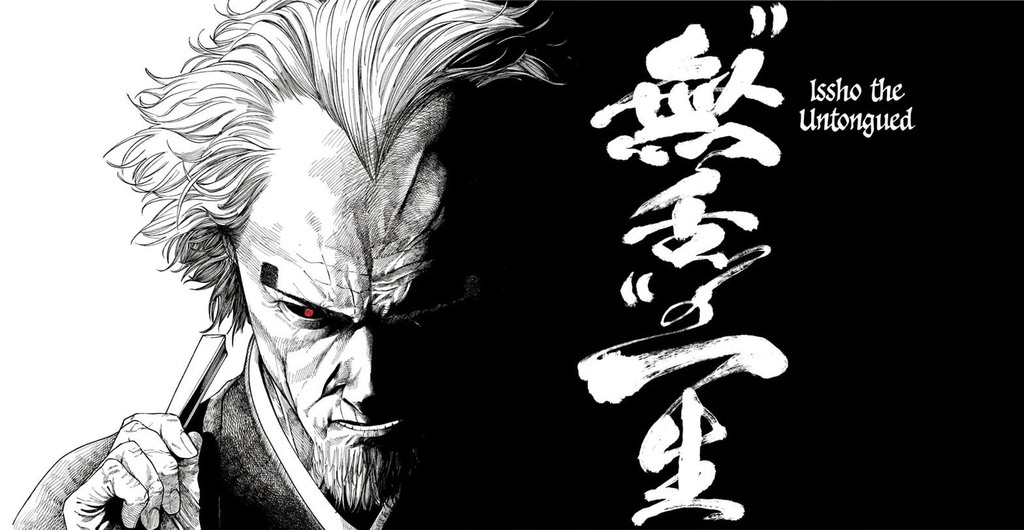
To add impact to the reveal of Issho’s epithet, they used a color page for a small bit of red in his eye in the final page of the chapter. I’d seen color be used as a surprise element to elevate pages in digital manga before. However, Akane-banashi is part of a printed magazine, where I’ve only ever seen color pages used for the title page or the first few pages of the chapter.
I can only imagine how surprising this move must have been reading it physically. It’s unlikely, but it would be nice if this page remained in color for the tankoubon, where it would also feel pretty unprecedented. Color pages are unfortunately usually made black & white for the compiled volume releases.
But this is just a makura to what this post is really about.
To be able to convey rakugo in manga form, Akane-banashi established a format it has followed until now. Audience reactions, summaries and commentary from knowledgeable characters fill in the gaps between mediums. Not only that, but to weave a stronger overarching narrative and develop its characters, their performances are usually interspersed with relevant flashbacks and internal monologues.
In my review of the Akane-banashi anime, I praised the Jugemu episode that was restructured to fit in more of the rakugo performance uninterrupted. Some viewers before that episode were also bothered by commentary getting in the way of the rakugo. That’s understandable as anime can allow the rakugo to speak for itself more easily. However, I do believe that in the manga, this format is essential and part of what makes Akane-banashi so good.
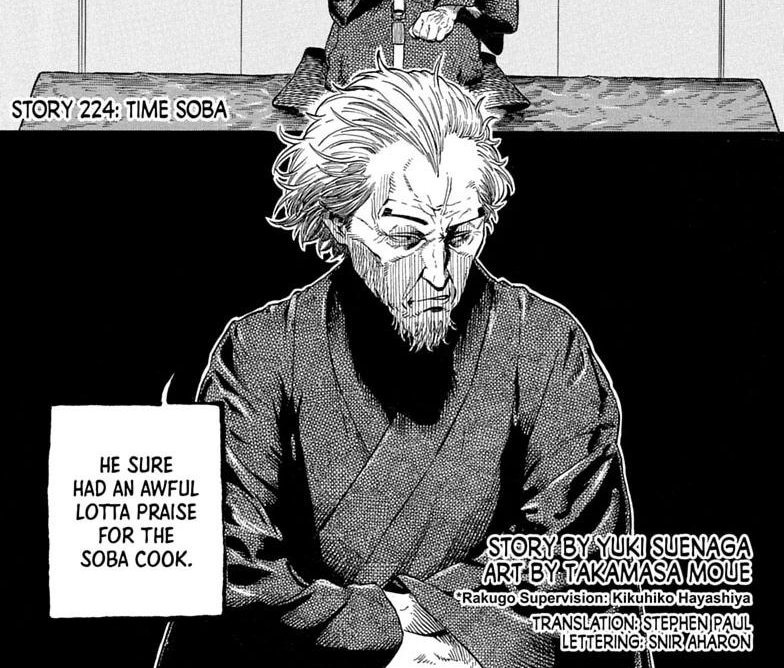
Story 224: Time Soba shakes things up by having the entire chapter focus completely on Issho Arakawa’s rakugo performance. Not a single shot of the audience. Not one bit of external narration. No flashbacks or thought bubbles.
Takamase Moue draws Issho’s movements for this performance in extreme detail. The drawings on the page may be static, but you can see him move. The paneling, the shading, the anatomy. The chapter is nothing short of an artistic accomplishment. All of it keeps you entranced from start to finish.
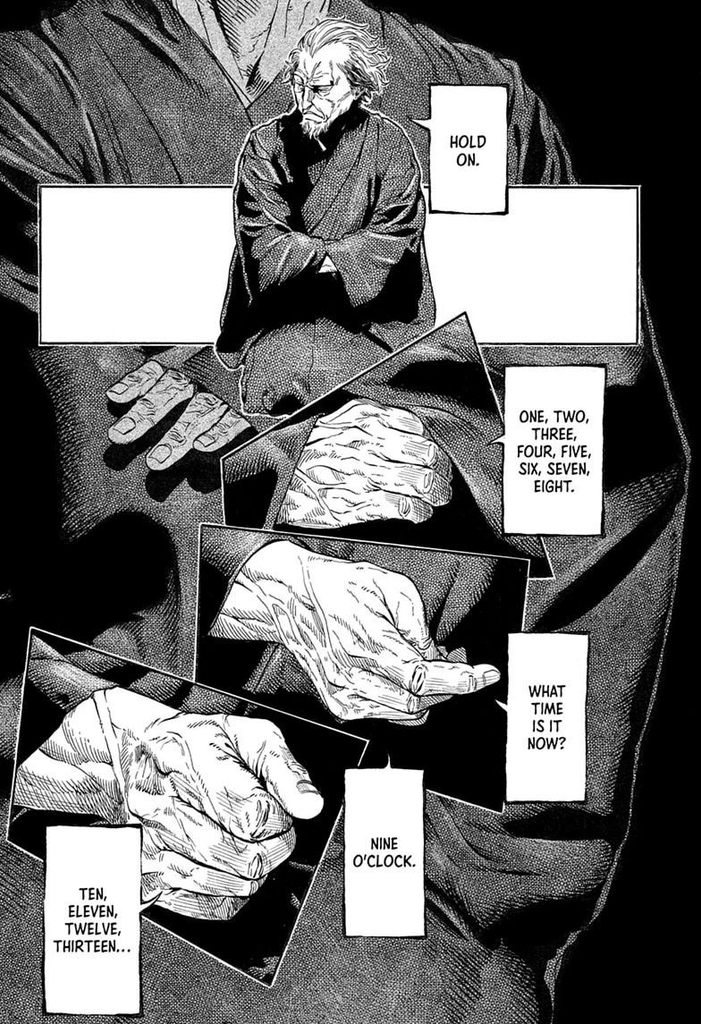
Only when the chapter ends and you snap out of it, do you notice just how truly unique it was even beyond the art. It’s important to note that if there hadn’t been an established format for this chapter to break, it would not have been as effective. Because you usually cut away from the performance, not cutting away from it this time conveyed just how strongly magnetic it was.
During Akane’s performance of God of Death, the manga used the audience ignoring the ship captain’s safety warning interruption as a way to show how absorbed everyone was (Story 205). This was even a callback to her master once performing through malfunctioning fire alarms (Story 123). But to show how far above Issho is from our protagonist, they made it so even the reader can’t be distracted from the performance.
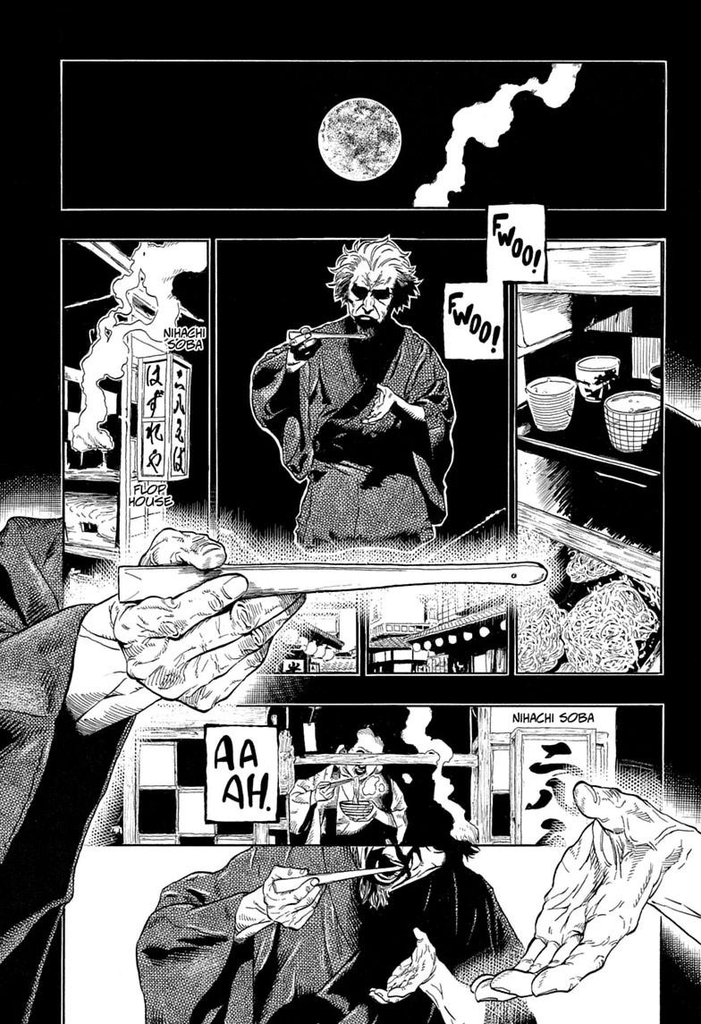
There was no need for any flashbacks during the performance because the important connection between Issho and Time Soba has already been long established in the flashback arc of the Arakawa School (Story 138). Back then, we were only shown one scene from the story, but now we get the full thing.
Time Soba (or Toki Soba) is one of the most famous rakugo stories, like Jugemu and God of Death (Shinigami). Finally witnessing it is a big deal. The fact it’s a short, entry-level story also allowed the manga to show it in full with no added summary to cut away to, and really focus on the artistry that Issho brings to the performance.
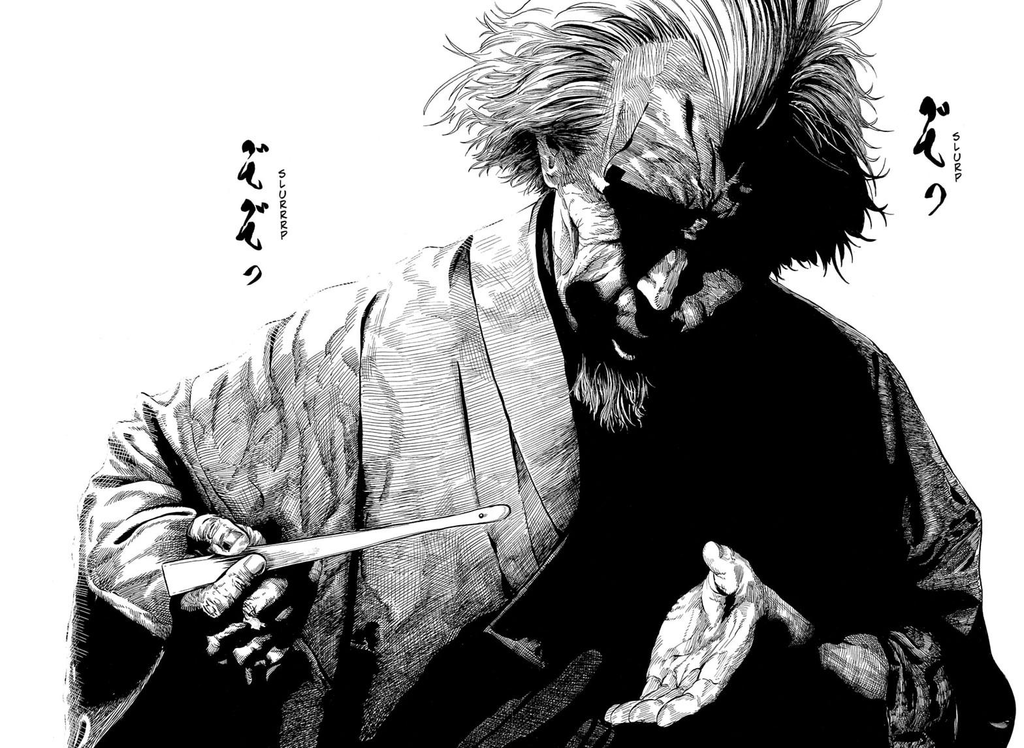
It’s fun to imagine what this chapter might be like animated, assuming the anime ever does make it this far. Maybe a fixed camera with no cuts and a legendary animator rotoscoping the full performance?
To give credit where credit is due, in the author comment for Story 225: Issho’s Performance, Yuki Suenaga revealed that the suggestion to have a chapter consisting only of rakugo was given by Yusei Matsui, author of The Elusive Samurai. What an incredible idea executed perfectly.
Seeing Issho Arakawa, the manga’s antagonist, perform rakugo was a long time coming and the expectations were tremendous. Yuki Suenaga and Takamase Moue were able to deliver a chapter that exceeded those expectations. By twisting the very format of the manga, it completely conveyed Issho’s philosophy of putting the art of rakugo above everything else.
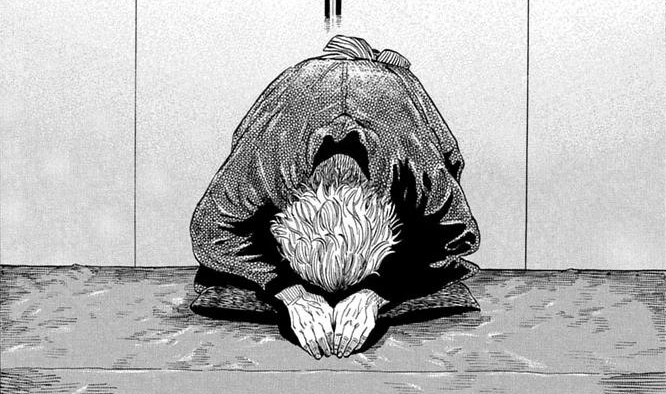
The Isshokai Arc came to a close this week with the 226th chapter. Including Issho’s Time Soba, it was full of great performances and developments like the God of Death Duel Duet. The ending with Akane’s request to Issho couldn’t make me more excited for what’s next.
